
Skip to content

New Squier Guitars Just Landed!

Fender has been making guitars under the Squier name since 1982, when they launched the line to compete with the inexpensive instruments then coming-out of Asia. Many of those import guitars and basses were based on classic designs like the Stratocaster, the Telecaster and the Precision Bass and Fender figured, correctly, they could do a better job of making entry-level Strats and Teles than anyone. Over the decades, the brand has grown to become one the most popular line of guitars for beginning and intermediate players in America. We are very excited to offer these well-crafted guitars and basses to you.

Squier Sonic Series

The Sonic series is Squier’s entry-level range and it includes well-made, inexpensive versions of famous Fender models like the Strat, the Tele, the Mustang and the Precision Bass.

Squier Affinity Series

The Affinity series is Squier’s flagship guitar range. This line includes classic models like the Stratocaster, the Telecaster, the Jazzmaster, the Precision Bass and the Jazz Bass at prices that won’t bust your budget.

Squier Classic Vibe Series

The guitars in Squier’s Classic Vibe series are based on vintage Fender models from the ‘50s, ‘60s and ‘70s. These are a step up from the Affinity series and not only do the various models have the cosmetic features of vintage guars, the pickups are voiced to match the era.

Squier Paranormal Series

The Squier Paranormal series reimagines classic guitar designs with unconventional shapes and innovative features for a fresh take on tradition. These models feature unique pickup configurations, different switching choices and upgraded materials.
See our Complete Stock> 

Wegen Picks Back in Stock!

Wegen picks are hand crafted by artisan Michel Wegen and his crew in the Netherlands. They are easy to grip, durable, and improve the tone of your playing. Wegen picks are suitable for guitar and mandolin and are popular for Django Reinhardt-style jazz guitar, bluegrass, and general rhythm playing. Here are some of our most popular styles.


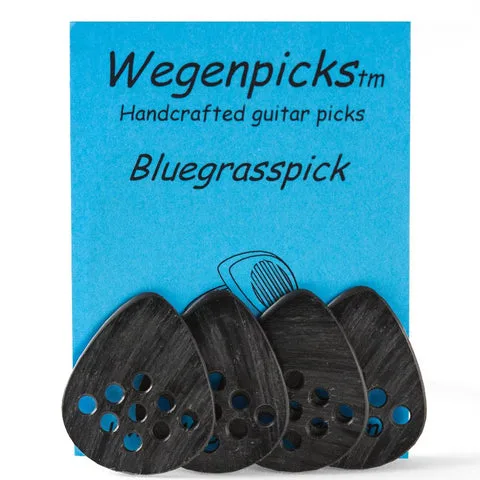
The Wegen “Bluegrasspick” is developed and designed for playing Bluegrass style on acoustic guitars. The ultimate pick for serious Bluegrass guitarists! Shaped like a tear drop with lightly beveled edges and a pattern of perforated holes for improved grip. 1.4mm thick and 32mm long.

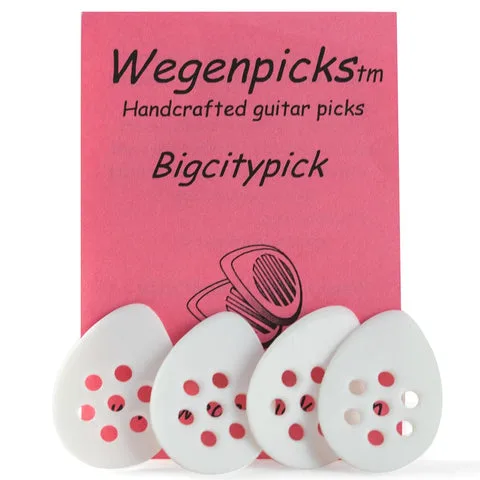
Wegen Bigcitypick is specially designed for acoustic jazz and blues guitar, but will do well on electric guitars as well. These Bigcitypicks are 29mm long and either 1.4mm or 1.8mm thick, with perforated holes for grip.

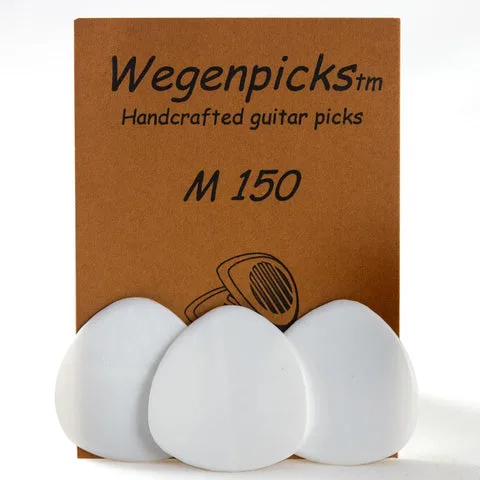
Wegen “M150” pick is a 1.5mm triangular pick specially designed in the shape and dimensions most popular with mandolin players. These picks greatly improve a mandolin’s tone and volume. M150 picks are 28.5mm long and 1.5mm thick with beveled edges.

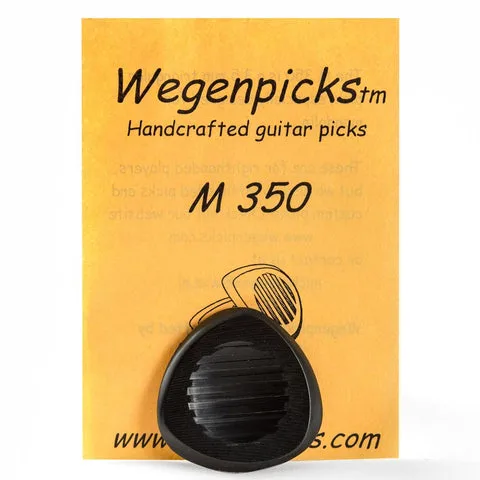
Wegen “M350” pick is a 3.5mm triangular pick specially designed in the shape and dimensions most popular with mandolin players. This pick greatly improves a mandolin’s tone and volume. Both sides of the M350 pick have grooves for grip, with a thumb impression on one side. The M350 pick is 28.5mm long and 3.5mm thick with beveled edges. Also great for guitar players.

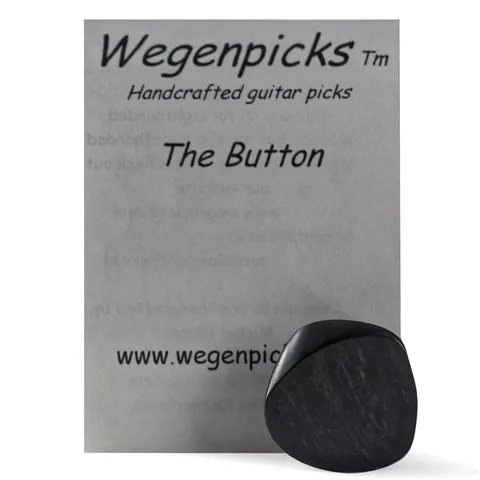
Wegen “The Button” guitar pick is specially designed for playing rhythm on acoustic guitars. Similar to the picks used by Django Reinhardt and other gypsy rhythm guitarists, the pick is thick at 5mm, with a “pre-worn” beveled edge.

Oval Hole Mandolins

It’s no secret that we’re big fans of carved top mandolins with oval soundholes here at Gryphon. While they don’t have the volume and projection that mandolins with F-holes have, they more than make up for it with a warm, bubbly tone that is well suited to Celtic music, jazz, classical, old-time string band music and just about any style that isn’t bluegrass. For decades, the only way to get your hands on an oval hole mandolin was to track down a vintage Gibson. Happily, there are now a number of builders making them in every price range.

Fender Hammertone Effects Pedals

Fender’s Hammertone effects pedals are well-designed, road-worthy and offer a nice range of sounds at prices that won’t break the bank. There are nine Hammertone pedals in all, including various distortion, time delay and modulation effects. They are all pedalboard-friendly and feature top-mounted input and output jacks. This lets you fit more pedals on the same board, while also increasing pedal routing options.

They are fitted in rugged aluminum enclosures with a uniform grey finish. The different models each have distinctly colored knobs and logos based on Fender’s historic custom colors. In a nice touch, the LED indicator lights up in the same color as the knobs, so you know which pedal is which on a dark stage. They are powered via a nine-volt adaptor or a battery that’s accessed by removing the baseplate via a single screw.

Although the Hammertone pedals are inexpensive, they are high quality and would be a great choice for a player looking for a user-friendly intro to the world of pedals or seasoned professional looking to fill a tonal gap on their pedalboard.

Taylor's New Legacy Series

For some of us old-timers, the Taylor Legacy series is a trip down memory lane as we can remember selling the original versions of these models when they were new. It’s funny, but we don’t know exactly when Gryphon became a Taylor dealer. We think we started carrying them around 1982, but when we called Taylor to check, it turns out their computer records don’t go back that far. (Ours don’t, either.) Still, we remember the days when Kurt Listug would show up in his Volvo station wagon to hand deliver the guitars like these models that he, Bob Taylor and their small crew built in the small Lemon Grove workshop.

Even then, we could tell Taylor guitars were something special. The first ones we stocked already had the slim, playable necks they are still renowned for. Along with the standard six-strings, they built amazing 12-string guitars that set a new standard for acoustic jingle-jangle.

This first run of Legacy models includes the Jumbo 815e, the Dreadnought 810e and the Jumbo 12-string 855e, the mahogany and cedar 514ce and the rosewood and cedar 714ce. Like the original versions, all of these have x-braced tops and straight-sided headstocks and the 815e and 855e have the iconic mustache bridge design. They are all fitted with LR Baggs Element pickups and include hardshell cases.

KR String Mandolindos and Octolindos in Stock!

Kilin Reece, the driving force behind KR Strings, is a well-known luthier and Hawaiian music historian based in Honolulu. After years of building and repairing a wide range of fretted instruments Kilin has designed two new instruments. The Octolindo is a flat-top octave mandolin that comes in a variety of styles. Thanks to a scalloped X-braced Engelmann spruce tops these are big-sounding octave mandolins with a deep, throaty tone and plenty of volume. The relatively short (21.5 inch) string scale and radiused fingerboard makes them remarkably easy to play.

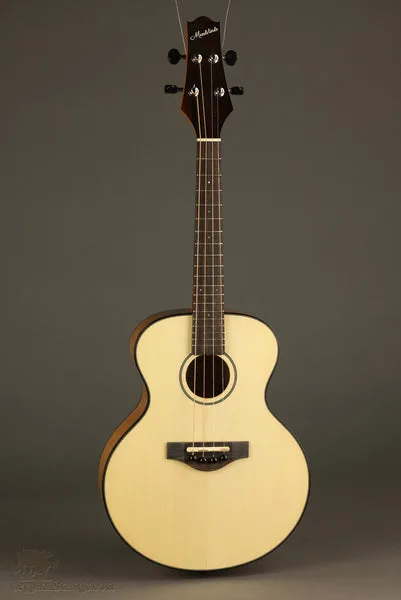
His other instrument, the Mandolindo, is a sort of cross between a mandolin and a steel-string ukulele. These hybrids have excellent tone with plenty of volume, and the radiused fingerboard makes chords easy to finger. For the mandolinist, these instruments offer extra hours of practice without the effort of fingering a double-strung instrument. For the uke player, a Mandolindo offers extra volume and projection which is especially welcome when playing acoustically with louder instruments like the guitar.

KR Strings Mandolindo Scholar

More Info>

Guitar, Banjo and Mandolin Straps from Lakota Leathers

The guitar, banjo and mandolin straps from Lakota Leathers are made on the Pine Ridge Indian Reservation, an Oglala Sioux reservation in South Dakota. The guitar and banjo straps are made from Bison (American Buffalo) leather and they are remarkably supple, which makes them very comfortable. 

Each guitar strap has a 36″ main body and a 24″ tail section. These pieces weave together to create an approximate maximum length of 58″ and a minimum length of 37″. Of course, they are completely adjustable. 

There are two types of banjo strap. The cradle style features a 48″ tail section which completely encircles your banjo pot assembly. This design is a Lakota Leathers original and it offers a safe and secure method to support your banjo.

The other banjo strap is the “non-cradle” style, which attaches to your banjo by utilizing two ‘tail -sections’ of bison leather. These two ‘tail sections’ are 3/4″ wide and are at both ends of the main body of the strap. These individually loop around a single tension hook of your choosing and are secured back to themselves by a Chicago screw.

The braided mandolin straps are crafted from Elk hide because it offers a better combination of strength and suppleness than any other leather. The length is 43″ with three adjustment holes at the strap button end.

The Frank Ford Scholarship Fund

The Frank Ford Scholarship Fund

The Roberto-Venn School of Luthiery is pleased to announce the launch of the Frank Ford Scholarship Fund. This is a collaboration with Frank’s wife Joy Imai, Richard Johnston, Gryphon Stringed Instruments and the Roberto-Venn School of Luthiery to honor the legacy of Frank Ford. Donations to this fund will allow learning experiences for aspiring luthiers for years to come. 

To donate, write your tax-deductible check to Frank Ford Scholarship Fund. (The fund is administered by the Friends of the Old Town Center for the Arts (FOTCA), which is a 501c3 non-profit charitable organization). Mail your check to: Gryphon Stringed Instruments, 211 Lambert Ave, Palo Alto, CA 94306 or donate online at: Frank Ford Scholarship Fund

 Tribute to Frank Ford
From Roberto-Venn School of Luthiery

We are deeply saddened to learn of Frank Ford’s passing. As a guest lecturer Frank regularly traveled to Phoenix to give our students a demonstration on neck resets, re-frets, pickguard replacement and many other repair operations to over 60 classes. We called Frank a ‘performance artist’ as he did these ‘demos’ in real time, while talking through each step of the process. His knowledge and experience in the world of guitars and guitar repair is truly remarkable. His tales of repair experiences, customer relations, tool use and everything guitar related was always fascinating, insightful and informative.

Through his dedication to training his tech staff, teaching at our school, his many appearances at the Guild of American Luthier’s and Association of Stringed Instrument Artisans conventions, appearances at Northwoods Guitar Seminar and tag team demos with Dan Erlewine, his writings in Fretboard Journal and many other publications, and all of Frank’s associations and vast network of clients, leaves a considerable legacy to his boundless sharing of information to the guitar making and repair community. His partnership with Richard Johnston and the creation of Gryphon Stringed Instruments is legendary, and a real testament to what a music store can bring to a community.

William Eaton, Director, Roberto-Venn School of Luthiery

John Reuter, Bart Applewhite, Steve Davis, Jim Prater, Robert Manzullo, Mark Allred, Brady Shreeve, AJ Machnes, Joe Vallee, John Lippi and all of the students and graduates of Roberto-Venn School of Luthiery


Fender Ukuleles

When we became Fender dealers, we knew we were going to love their guitars and basses, but we had no idea that we would be as charmed by their ukuleles as we have been. Fender offers soprano ukuleles in a variety of models that echo the body shapes of their famous electric guitars. You can choose between a Telecaster, a Stratocaster, or a Jazzmaster in a variety of colors. And they all come with factory-installed pickups.

For the more traditionally minded, Fender offers a pair of tenor ukuleles which were designed with input from Dhani Harrison. (Dhani is the son of  George Harrison, who was a huge ukulele fan.) These two ukuleles have the traditional hourglass body shape and they also come with factory installed pickups.

The biggest surprise in the Precision Bass ukulele. This is tuned in the same register as a full-size bass. It doesn’t have much volume when played acoustically, but when you plug it in, it has a remarkably full bass tone. This would be a good choice for someone looking for a travel-size bass.

Northfield's Big Mon Mandolin

Northfield’s “Big Mon” is of course named after the famous Bill Monroe tune, and like his iconic Lloyd Loar F-5 it has the black-white purfling lines on the sides (instead of on the top and back). Unlike Monroe’s Loar, the Big Mon has a slightly larger body which produces a bit of extra oomph in volume and resonance, which becomes clear with just a few chord chops and quick runs with your flat pick. It’s hard to believe this is a brand new mandolin, and when those brassy-sounding new strings are broken in a bit the tone will be even more convincing. Northfield pulled out all the stops for this model, even giving it a hybrid varnish finish instead of straight nitrocellulose lacquer.

The Big Mon comes in a variety of finishes including their standard Loar-style sunburst; a darker sunburst they call Icelandic Brown; an all-body Amber finish; and a Black Top with sunburst back and sides, a look that Orville Gibson created in the 1890s. Northfield offers three different tonewoods for the top: Adirondack Red Spruce, Engelmann Spruce, and Italian Spruce. They also offer two nut widths, the standard 1 1/8″ and the wider 1 3/16″. The fretboard is radiused on all of the variations. The Big Mon is our most popular Northfield model. Stop on by and give it try and we think you’ll find out why.

Deering Goodtime Banjos

Deering Goodtime banjos started with a simple 5-string open-back model and over the years the line has grown into a series of over a dozen different models. There are so many different Deering Goodtime models that they’re almost a banjo company in itself.

The heart of any banjo is the round rim that the neck and all metal parts attach to, as that’s the source of good banjo tone. All Deering Goodtime banjos share the same high-quality rim of three-ply violin-grade maple. The way these rims are made, with all the grain running horizontally, is also critical. There’s no cheesy multi-ply construction with vertical-grain layers, a Goodtime banjo rim is equal to what you’ll find on new banjos selling for much higher prices.

Deering sticks with maple for just about all the wood parts of every Goodtime model, and that’s a good thing indeed because rock maple is an excellent wood for instrument necks. Deering Goodtime banjos also have a maple fingerboard, just like on those classic Fender guitars, and an added benefit is that means no tropical hardwoods are needed. On Goodtime models with a resonator, layers of maple veneer are used for the arched back just as on expensive bluegrass banjos.

The metal parts on Goodtime models are of excellent quality, including high-ratio geared tuners, but they’re designed to do their job without adding lots of unnecessary weight. A typical Gibson Mastertone banjo, or the many copies of one, will weigh in at close to 12 lbs while the Goodtime Two (which also has a resonator) weighs barely more than half that. The openback Goodtime, weighing only 4 lbs, is the obvious choice for traveling with a banjo.

We’ve saved the best feature of Deering Goodtime banjos for last: All Goodtime models are made in Spring Valley, California right alongside the higher Deering banjo models. Deering essentially brought the manufacturing of lower-priced banjos back to the US after decades of that segment of the market being monopolized by imports.

There’s a Deering Goodtime banjo for just about every playing style that relies on banjo tone. This includes guitar banjos, tenor banjos and, of course, a variety of 5-string models including the Goodtime open-back banjo and the Goodtime Two, which has a full-sized resonator. For those who like the sound of an open-back banjo with a larger 12” head, the new Goodtime Americana delivers that more mellow tone at a bargain price.


The Martin Modern Deluxe Series

The Modern Deluxe Series combines Martin’s legacy of old world craftsmanship with some impressive contemporary features. These guitar have scalloped, forward-shifted x-bracing and the bodies are constructed using natural protein glue, both features Martin used during the 1930s, the era when the modern flattop guitar was created and refined. The modern features include  carbon fiber bridge-plates, which are light and stiff and helps increase volume and sustain; Vintage Tone System (VTS) spruce tops; long wearing EVO frets; and an new asymmetrical neck shape that gives you maximum comfort up and down the fingerboard.