
Calton Cases Offer Maximum Protection
For more than 40 years, Calton Cases have offered the maximum amount of protection for your valuable fretted instrument. The newest versions of the popular travel cases are made in Austin, Texas and combine modern construction techniques like CNC machining with old-world hand work to custom fit each interior, ensuring a safe and secure home for your instrument.
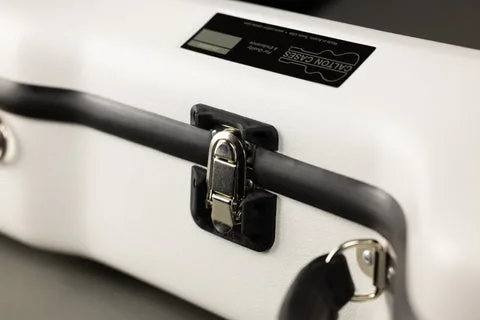
The shells of Calton cases are constructed of an outer layer of gel-coat, which gives the case its color and the first level of protection. The next layer is a composite sandwich of fiberglass and reinforcing foam, a construction process that provides for a high strength-to-weight ratio. The latches are protected by the new Calton Catch Surround, a unique hard rubber bezel that is angled to deflect a blow which would otherwise damage or break the latch.
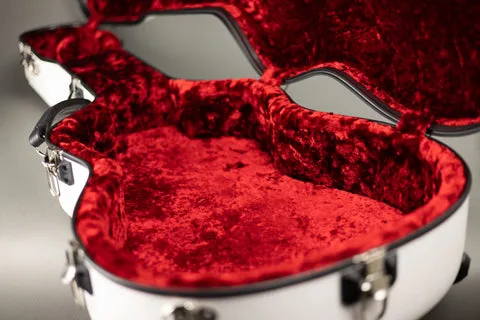
The interior of the case is fitted with thick foam padding covered with plush, color-fast velvet which will not bleed into the finish of the instrument. The foam is custom fitted to each case which allows a snug fit that ensures the instrument is well padded and protected. Calton Cases are designed to withstand pressure up to 1100 lbs and to survive impacts from up to 9 ft. They are also designed to maintain interior humidity for at least 72 hours, even when external humidity rises or falls by 40%. The rubber tongue and groove trim keeps moisture out and helps maintain a consistent humidity level when the case is closed.
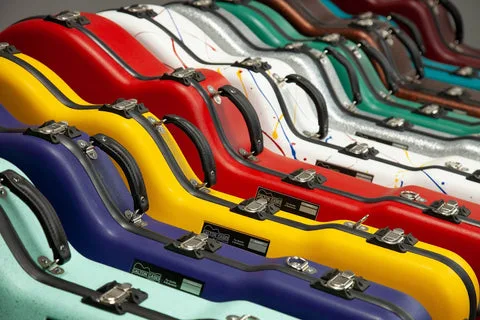
We always try to stock a handful of Calton Cases for standard guitar, mandolin and banjos sizes but we can special order a case for just about any fretted instrument in a wide range of interior/exterior color combinations. If you are looking for a case to keep your musical adventures from turning into misadventures, the offerings from Calton will fit the bill.
Kamaka Ukuleles: History You Can Play
Kamaka ukuleles are not only beautifully crafted, great sounding musical instruments, they are an integral part of the ukulele’s history. Samuel K. Kamaka, the company’s founder, wasn’t present for the birth of the ukulele, but he was around while it was still in diapers. In 1910 Sam Kamaka apprenticed with Manuel Nunes, one of the three Portuguese luthiers who brought the the ukulele’s ancestors, the braguinha and machete, to Hawaii in 1879. Kamaka proved to be a quick study and in 1916 he left Nunes and started the company that bears his name.
“If you make instruments and use the family name, don’t make junk.” – Samuel K. Kamaka
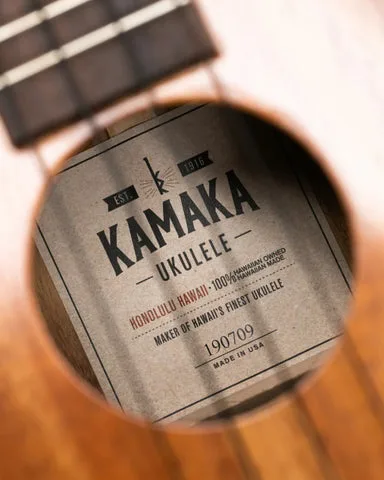
From the beginning, Sam Kamaka’s instruments earned a reputation for high quality construction and exceptional tone, a tradition that has carried through to today. These days, Kamaka offers a full line of ukuleles, including soprano, concert, tenor and baritone sizes. Sam Kamaka retired in 1952 but his son Sam Jr. took over the business and his sons took over from him in turn.
To this day, Kamaka is still a family owned company and we get a small thrill when we call and get to speak to one of Sam Sr.’s relatives on the phone. In 2016, Kamaka celebrated its 100th anniversary of building ukuleles in Hawaii, a remarkable achievement for any company. We only have one complaint with Kamaka. They won’t compromise the quality of their ukuleles by rushing production or mass producing them so we can never get as many as we would like. But if it means that their ukes continue to sound as good as they do, we can live with that problem.
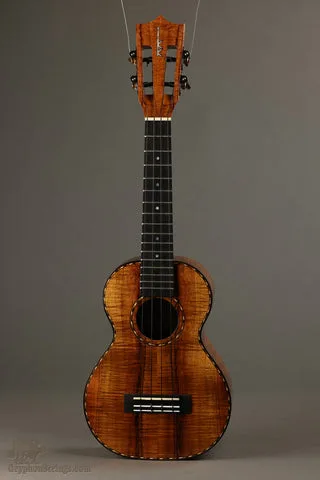
Kamaka’s Models
Soprano
The classic ukulele. The Soprano may be small but Kamaka’s version is loud with lots of projection. For a warmer tone, you might consider the Pineapple. Kamaka has been building Soprano ukes for over a century so they really know how to get maximum tone from such a small package.
Concert
Kamaka’s Concert ukes are more popular at Gryphon than sopranos. They’re a little bigger and the longer scale means the frets are a little further apart so chord positions are easier to finger thanks to the extra room on the fretboard. Concert ukes still have the sparkling tone of the soprano but have more volume and presence.
Tenor
The Tenor size is our best-selling Kamaka ukulele, hands down. We think this model’s versatility is part of the reason. It sounds great with the traditional “my dog has fleas” tuning but it also works well with the Low G tuning, too. Players find that complex chords are easier to finger on the bigger neck, and the larger body produces a warm, mellow tone that’s hard to beat.
Baritone
The Baritone is the largest ukulele. The Baritone ukulele was introduced in the late 1940s and it’s tuned to DGBE, the same pitches as the top four strings of the guitar. Baritone ukes were very popular in the 1950s and 1960s, but players don’t seek them out the way they used to. Still, the big uke does have a small but devoted fan base and Kamaka make just about the best sounding version out there.
Northfield Mandolins
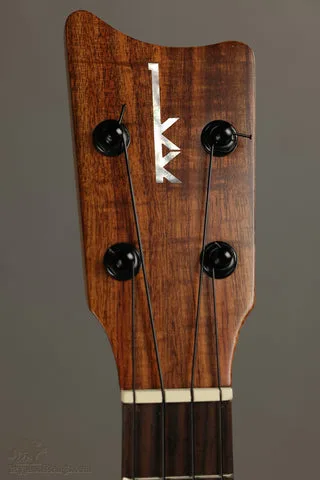
There’s been a mandolin renaissance in recent years, both in terms of the quality of the new instruments available and also the wider range of music played on mandolins of all types. The “bluegrass, Irish, or old-time?” trio of styles that used to define a majority of mandolin music played in North America is now only where it starts, and new companies and ways of building the instruments have also expanded. A prime example of this new direction is Northfield Mandolins, and instruments by this relatively young company have played a big part in Gryphon’s expanding mandolin inventory and sales.
Northfield Mandolins is the brainchild of Adrian Bagale, a Michigan native who worked up to the position of Vintage Acoustic Instrument Specialist for Elderly Instruments in Lansing, MI before moving to San Francisco in 2002. 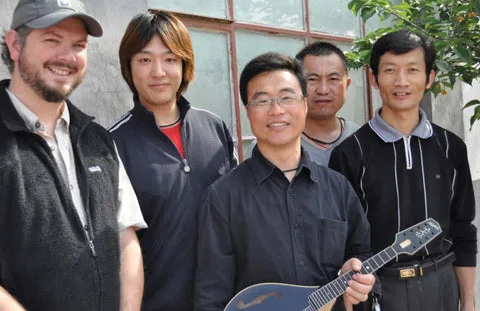
We tried to hire Adrian to work at Gryphon but failed as he’d already done retail and wanted to try something new while still staying with the guitars and mandolins he knew so well. He was quickly hired by Saga in South San Francisco, the importer and distributor of a wide variety of stringed instrument brands including Kentucky mandolins. After years of importing Kentucky mandolins from Japan, Saga was then beginning to import mandolins made to their specifications in China. Adrian soon found himself Saga’s Global Liason, commuting to Japan, Korea, and China. Before long he and his family were living on the other side of the planet as Adrian was overseeing production of mandolins, banjos, and guitars for Saga. Being the highly personable guy that he always has been, Adrian soon had friends in all stages of instrument production in both Japan and China, plus a growing network of musicians and builders in the states who focused on the mandolin. Kosuke Kyomori, a Japanese builder working as a production manager in China, shared Adrian’s desire to change direction and focus on building small numbers of high-quality mandolins instead of constantly hustling to fill shipping containers with them.
Adrian and his family didn’t live in China for long, moving back to Marshall, Michigan in 2008. Northfield Mandolins soon began to take shape as a multi-national effort involving American, Chinese, and Japanese guys who all shared a love of fine woodworking and fine mandolins. As well as running the business end in Michigan, a lot of time and effort goes into sourcing wood. While most Northfield mandolins are made in the coastal city of Qingdao, China, the maple and spruce used to build them all comes from North America.
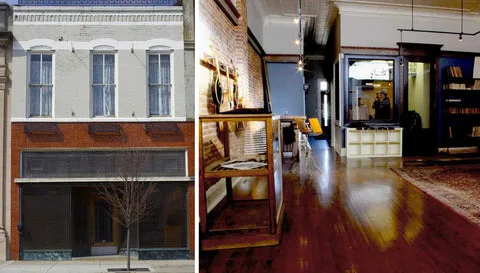
The Sino-American-Japanese team that Adrian has assembled to design and build carved top & back mandolins is ironically headquartered in an 1870s-era brick building just a few miles from Kalamazoo, where Oroville Gibson started the whole American-style mandolin revolution over 110 years earlier. Tradition runs deep in this new company!
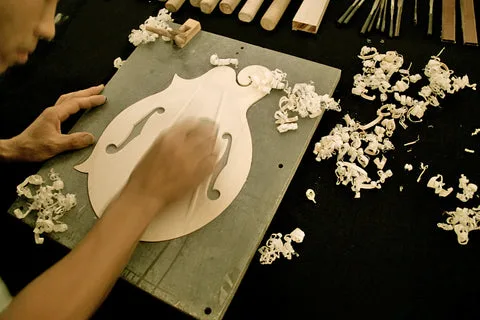
Of course Adrian and his team aspire to building mandolins compared to the early 1920s instruments built in Kalamazoo under Lloyd Loar’s direction, but they don’t stop there and continue to push mandolin design into new territory from a couple of angles. For instance the Northfield “Big Mon” looks like a standard F style, but some of the dimensions are just slightly larger and the sound is a bit different, with a more gutsy punch in the midrange.
Along with the standard twin tone-bar top bracing used on the original Lloyd Loar F-5s, Northfield also offers a 5-bar bracing variant which offers a wider range of harmonics and increased bass response. Other experiments include a varnish/lacquer hybrid finish which retains the tonal characteristics of varnish but with better resistance to wear.
Uhoh…Oahu!
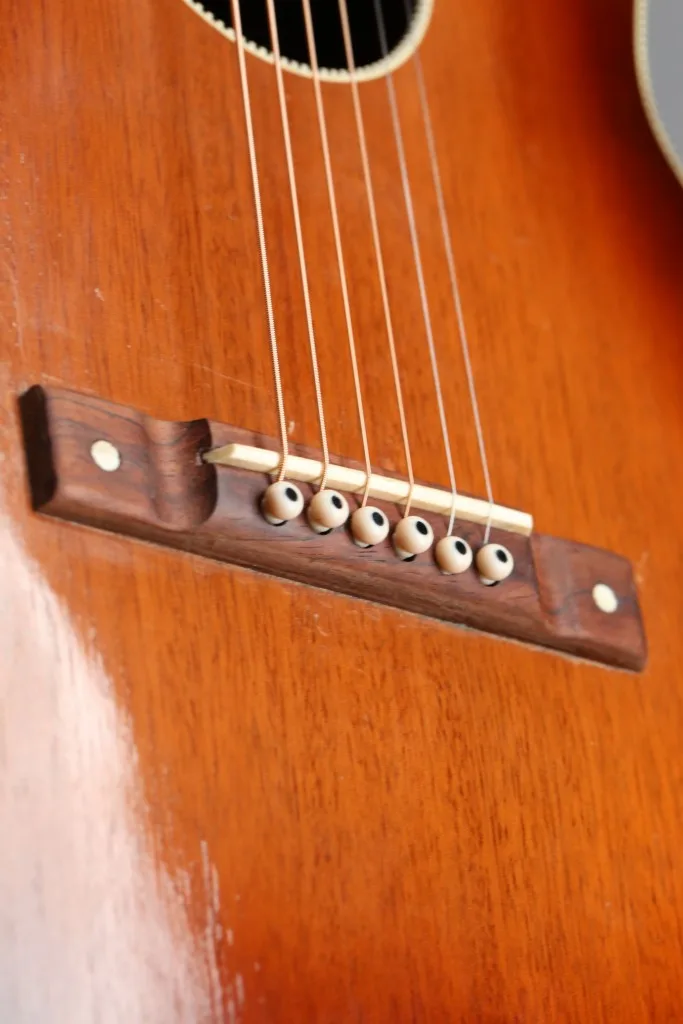
Here’s a fun old Oahu squareneck with a pretty serious problem.
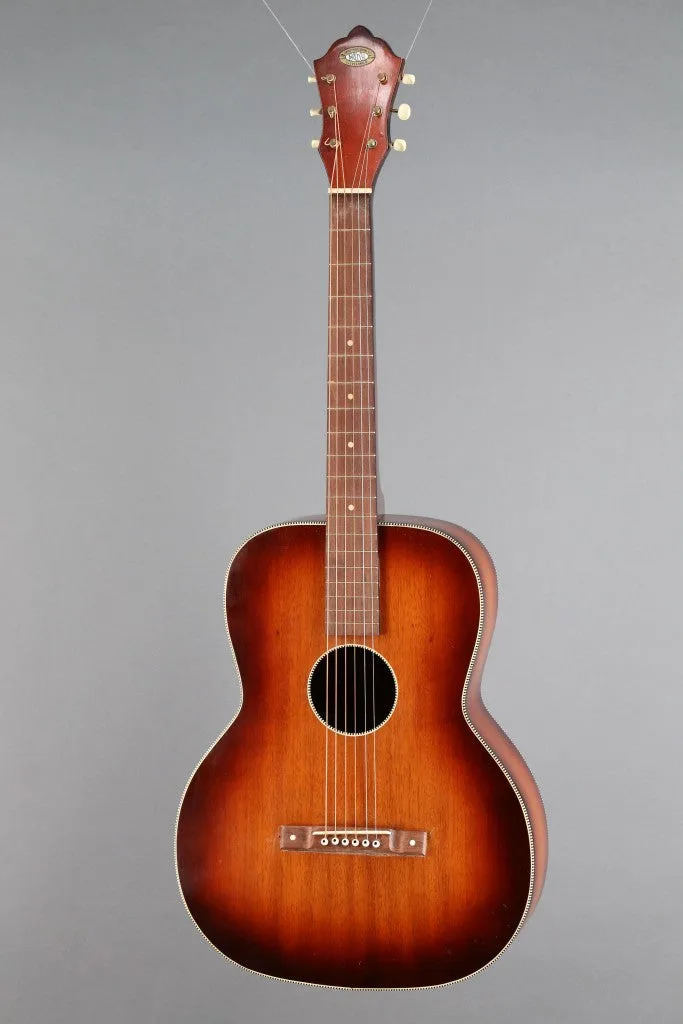
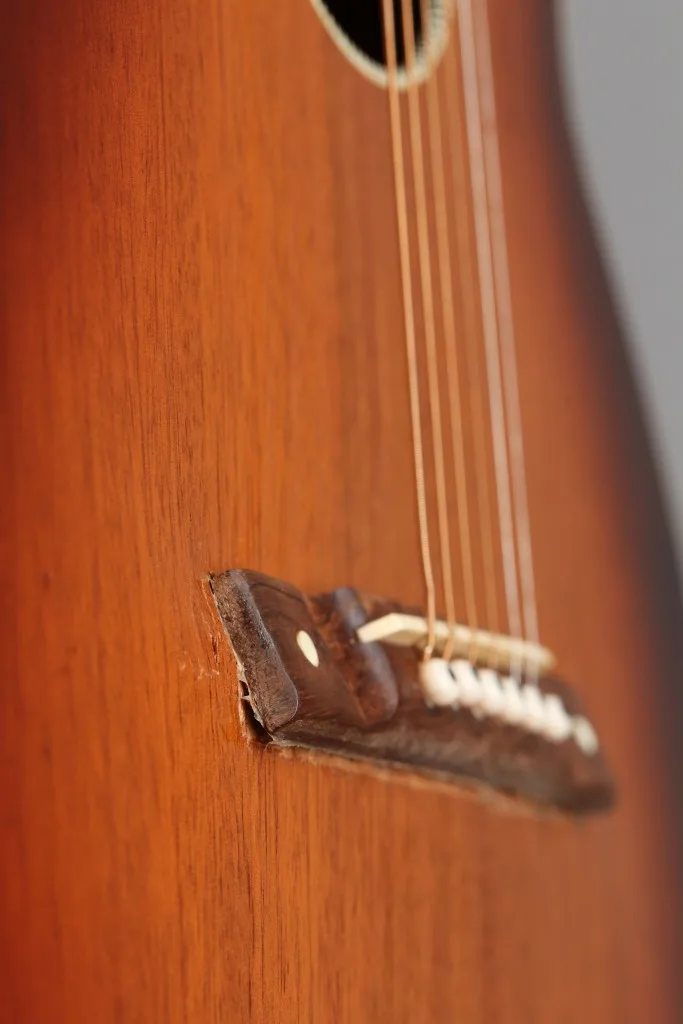
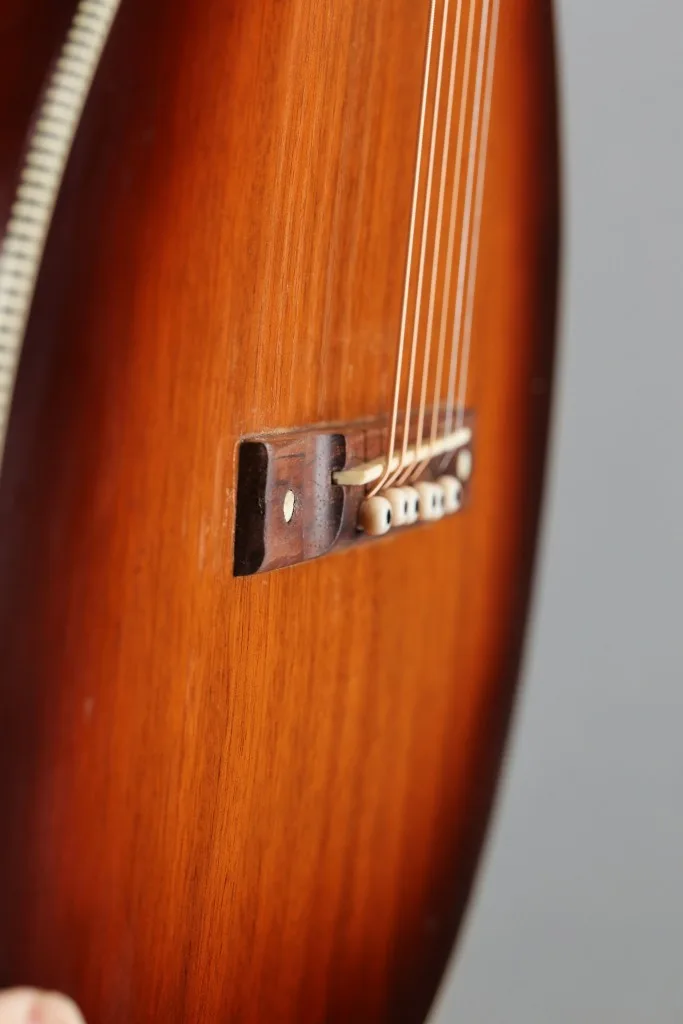
It’s a laminate top with a bolt through each wing of the bridge. As the top relaxed over time, the bolts fought back and cracked the bridge plate and the top. You can see the top belly in these side shots, with the bridge leaning at an unusual angle.
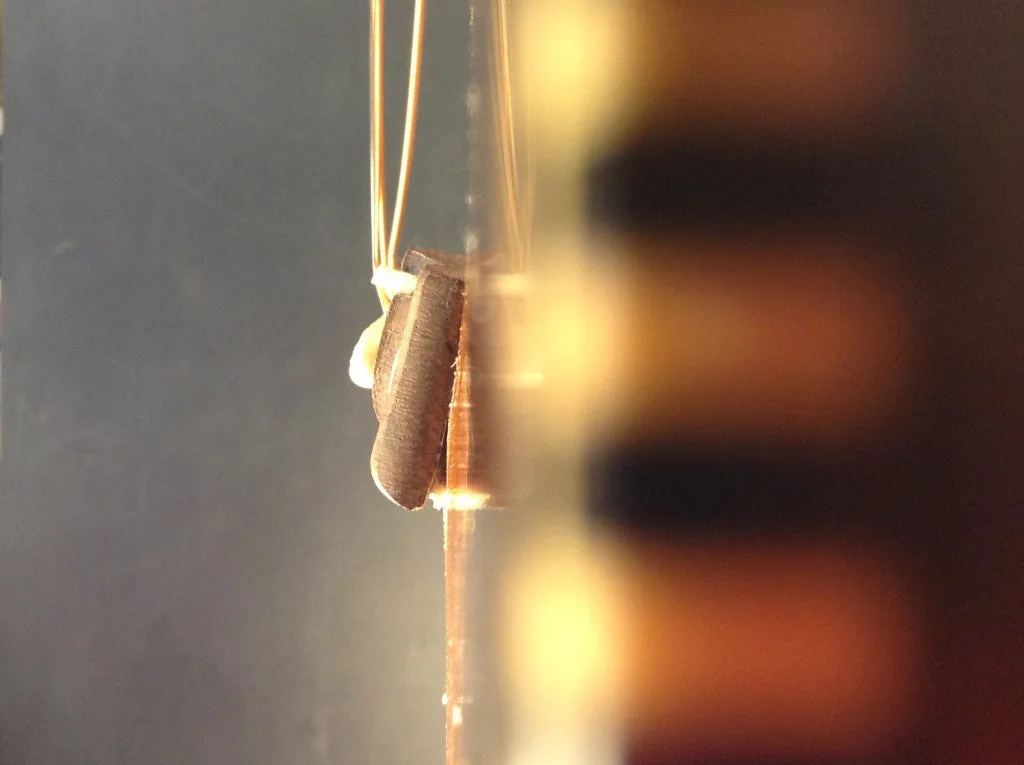
In the shot below you can really see how the bridge torqued the top and cracked it in half.
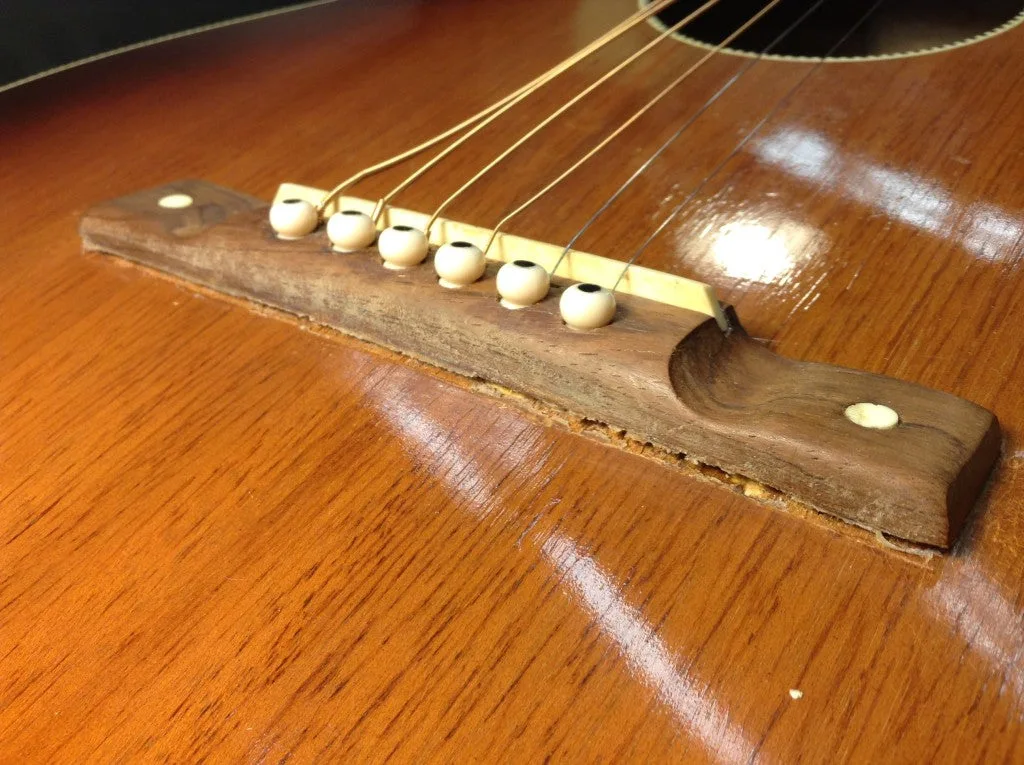
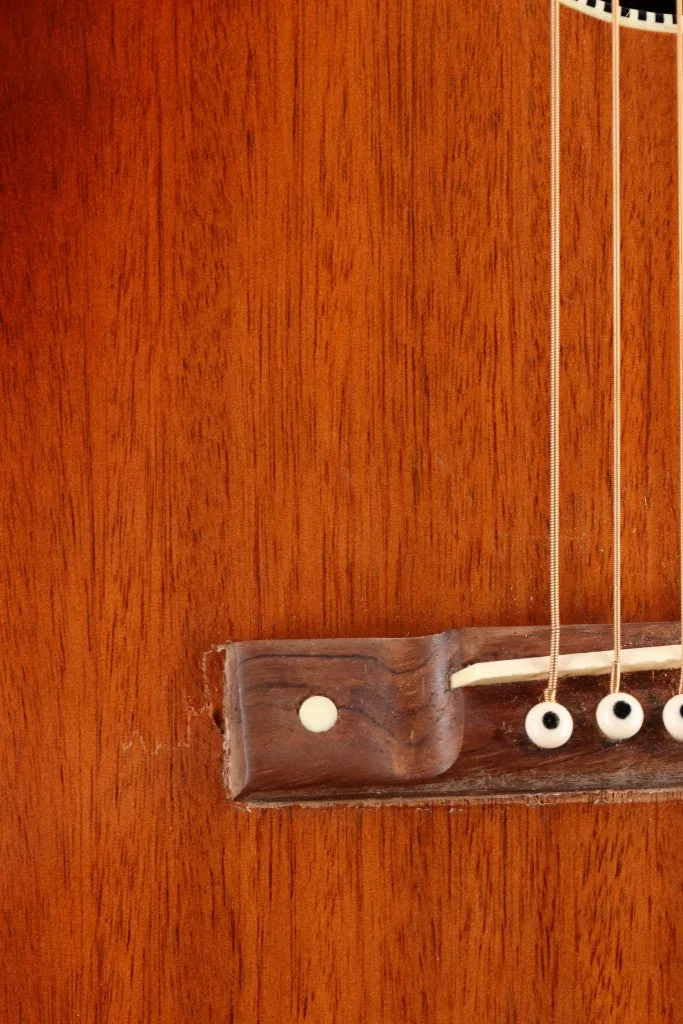
In this one you can see the crack in the top itself, just to the left of the bridge wing. It’s like this on both sides.
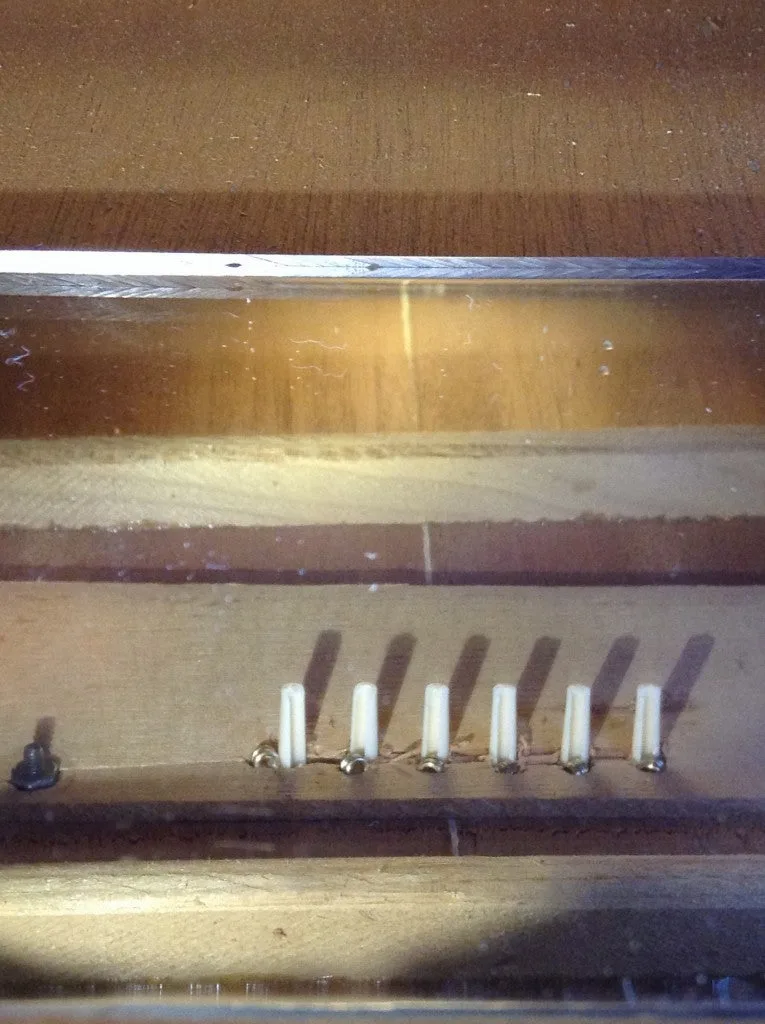
When I took a look inside, things didn’t improve. The bridge plate looks like pine or something similarly soft. It’s cracked right at the bolts, and the stringballs are working their way through the top. Also notice the grain orientation. It’s going perpendicular to the strings, making it easier for the tension to split it in half.
So I dove in and pulled off the bridge off.. it didn’t take much.
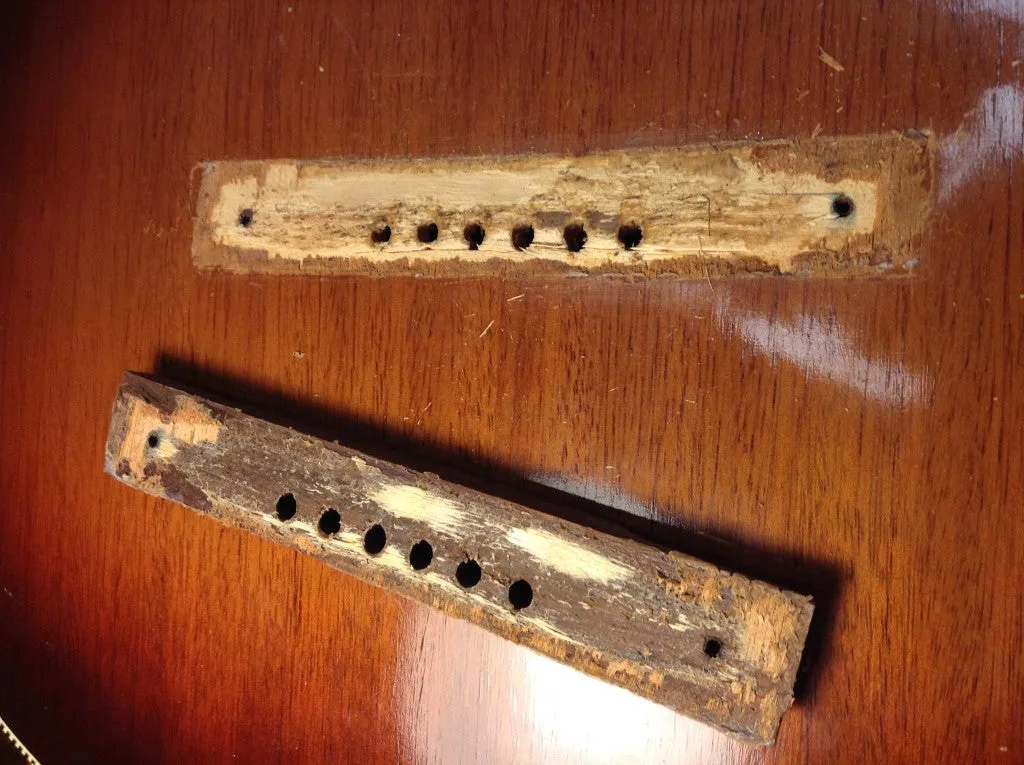
Now the bridge is off, here’s a fun shot of a light inside the guitar illuminating the long crack in the top.
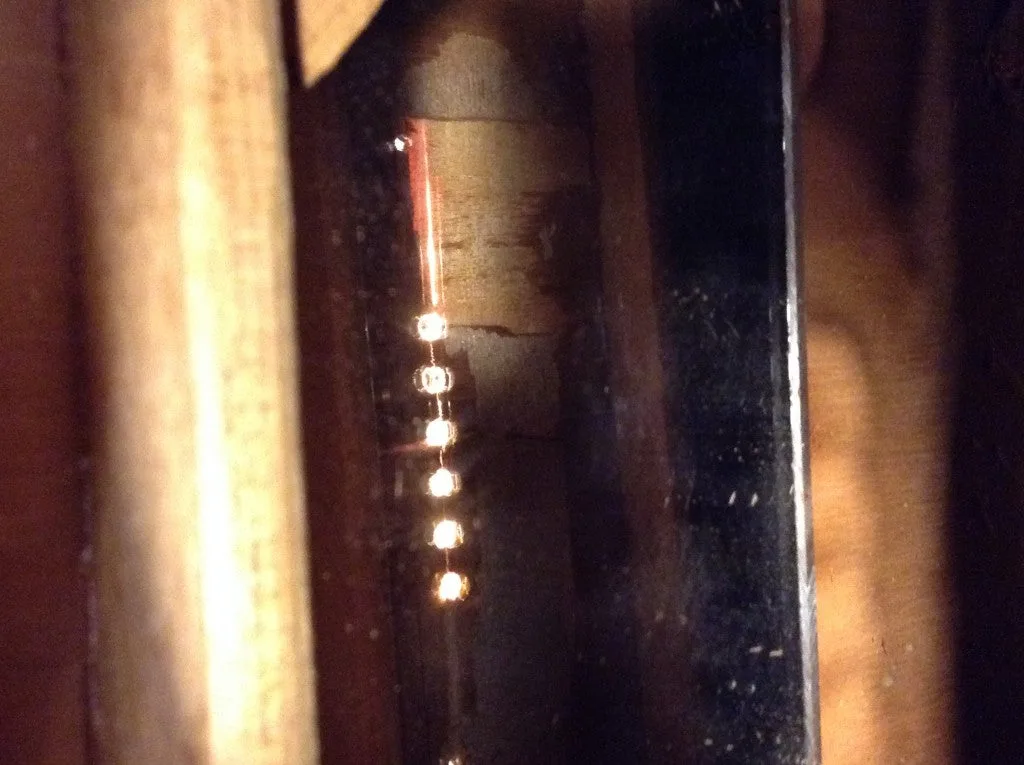
So now i’m going to try and remove the bridge plate and put on a strong new one to try and help out the top.
Here goes.
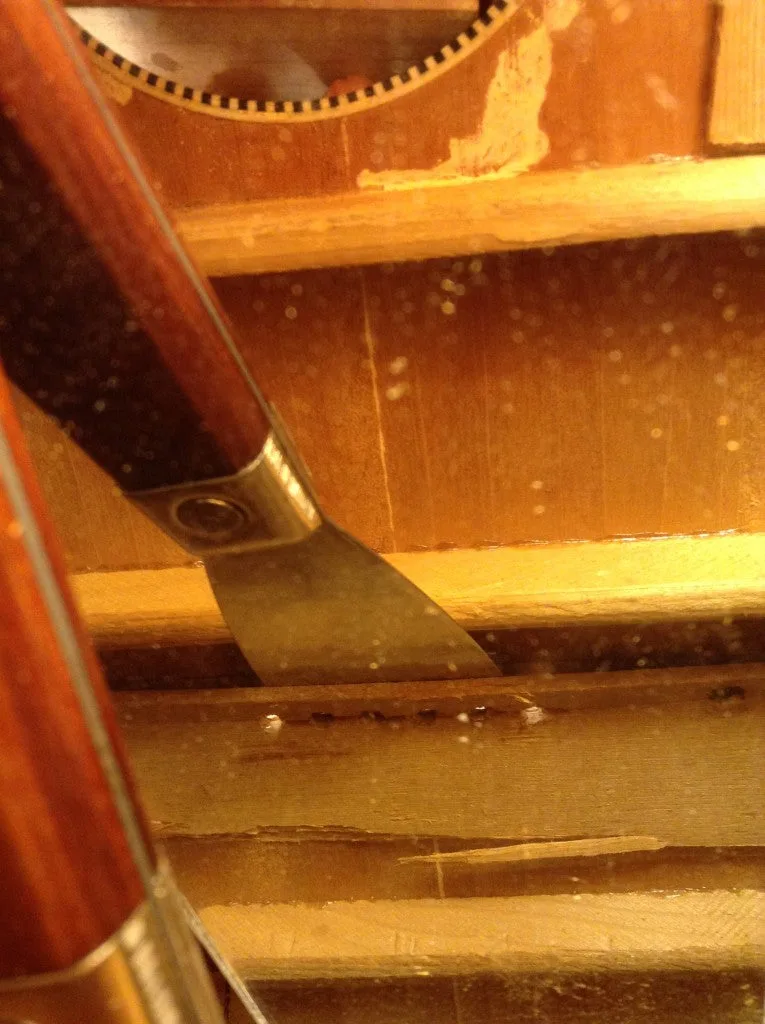
The first part came out easily. The back part was stubborn. I used a variety of bent scrapers and files to pull on the back edge.
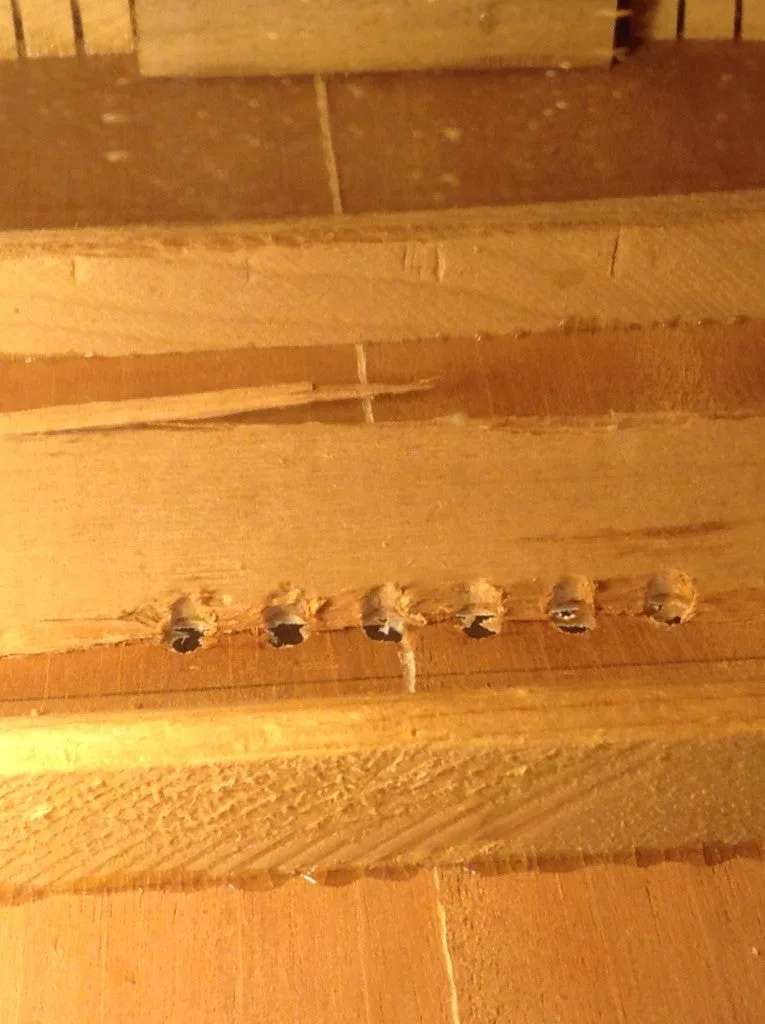
After a while the plate let go, but it left behind a pretty uneven surface. I could use a block and some sandpaper to clean it up, but I just don’t feel like bending my wrist around like that. Luckily for me, Frank has a fun tool for this purpose.
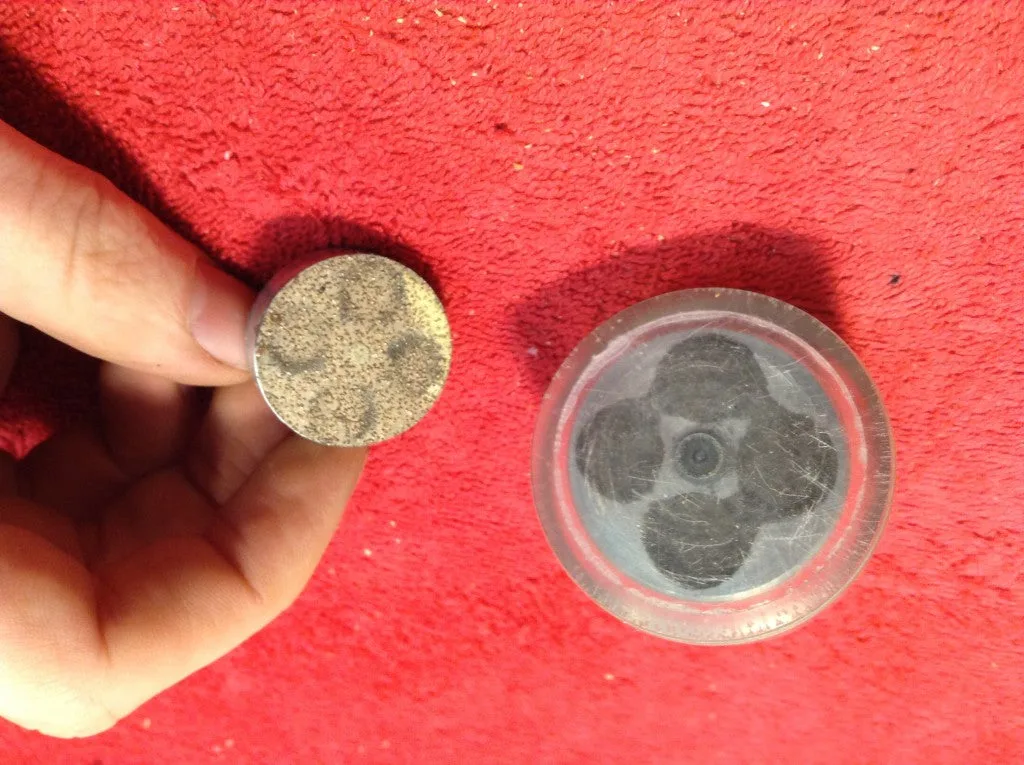
This is Frank’s magnet sander. The disc in my hand has a very aggressive coarse surface, with four rare earth magnets inside (notice the dark circles). The other part is an acrylic base with a rotating internal system of magnets that match the sander. This part gets mounted in a drill and goes on the top surface, while the sanding disc goes on the interior surface and spins away.
The really clever part is that the acrylic doesn’t spin on the outside surface and scratch it up.
It’s a little hard to describe, here’s a video of it in action.
After the inside was sanded smooth, I glued in a new maple bridge plate and got a good amount of glue in the top crack. Then I glued the bridge back on and strung it up.
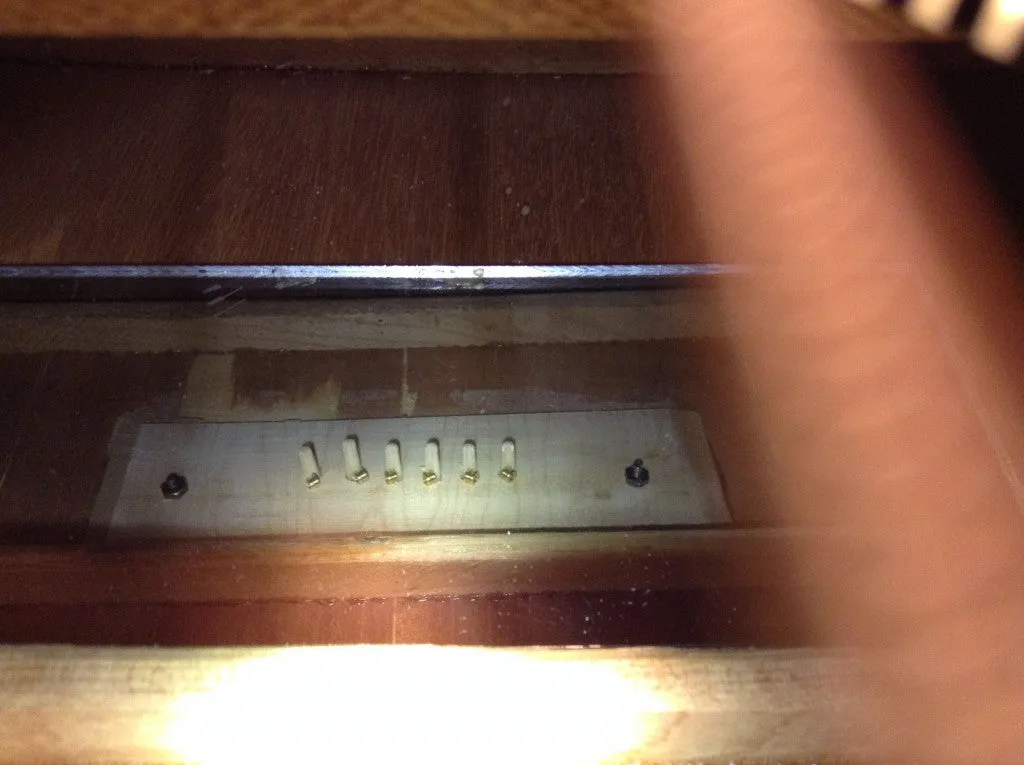
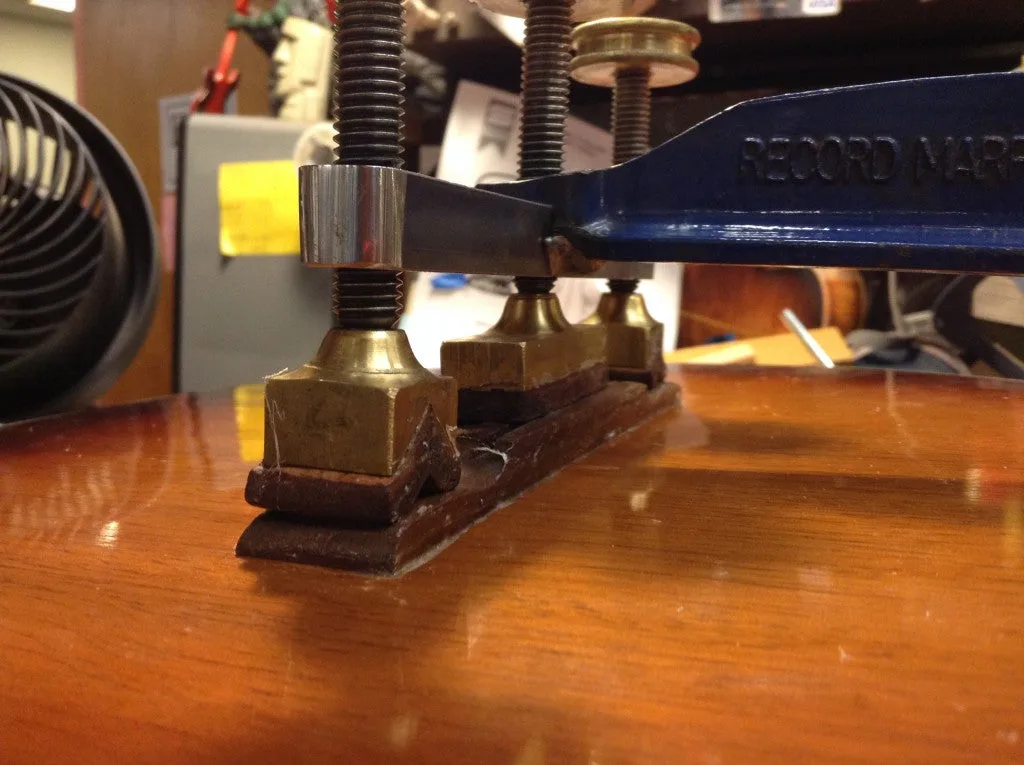
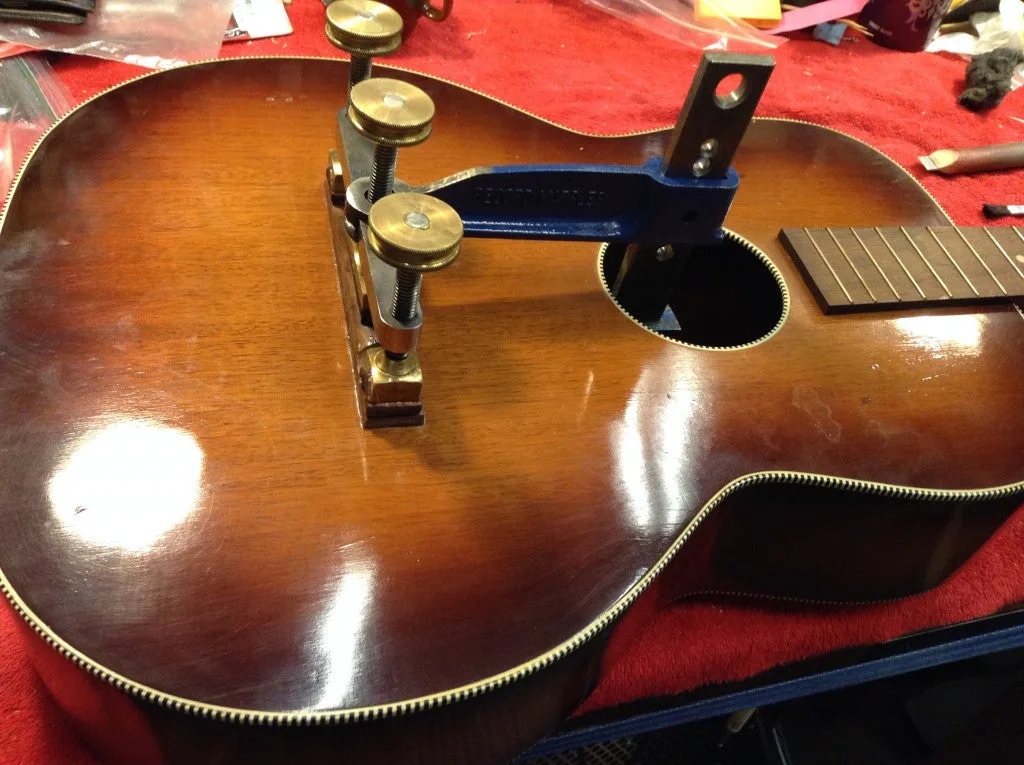
Ready to go!
Rules to Visit Gryphon or Schedule Repairs
All in-person repair consultation is by appointment only. Please call us at the shop (+1 (989) 498-9527) to schedule an appointment to bring your instrument in for evaluation. Due to the backlog of work, we are not able to take in repairs without an appointment.
While we can often restring your guitar, banjo, mandolin or ukulele on the day you bring them in without an appointment, it’s a good idea to call in advance to make sure we have the time free to do the job. You do not need an appointment to pick up your guitar after repairs are completed.
Please stay connected with us through our website, email newsletter (subscribe on our website), and social media for up-to-date information. During these unprecedented times, we wish to continue to fulfill your musical needs as best we can while observing all necessary health and safety practices.
You can email any questions to info@gryphonstrings.shop.
Frank is on the Fretboard Journal's Luthier on Luthier Podcast!
Our own Frank Ford was just interviewed on the Fretboard Journal’s Luthier on Luthier podcast. He talks about the early days of Gryphon when he and Richard Johnston built and sold handmade guitars and instruments. Frank also talks about the store today, his favorite repairs, and how, thanks to Dan Erlewine, he got started in teaching.
Best Gryphon T-Shirts EVER!
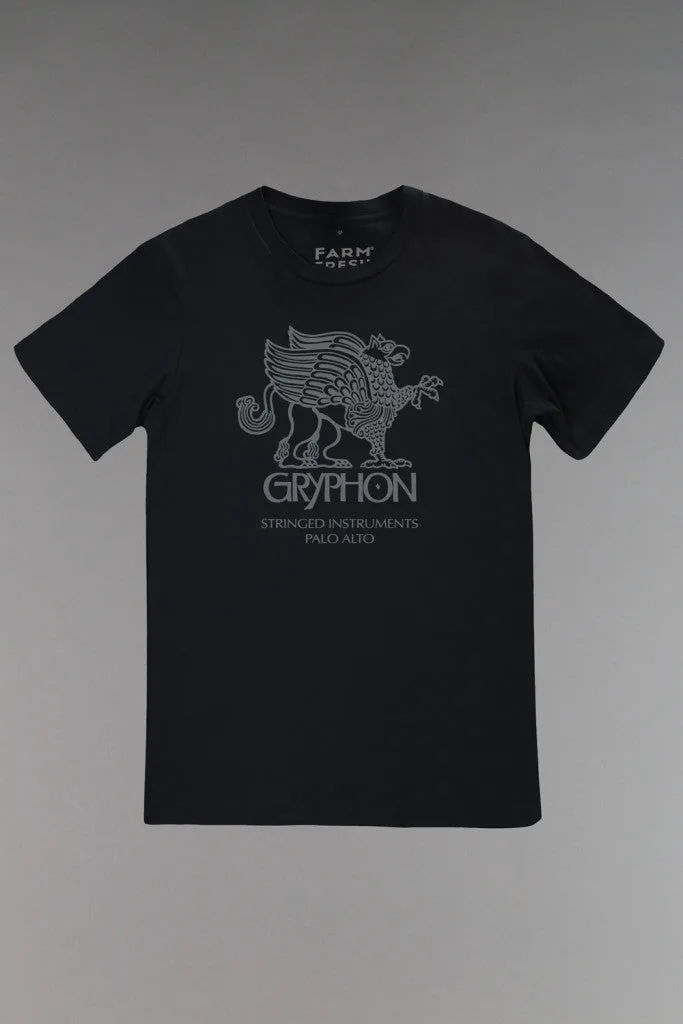
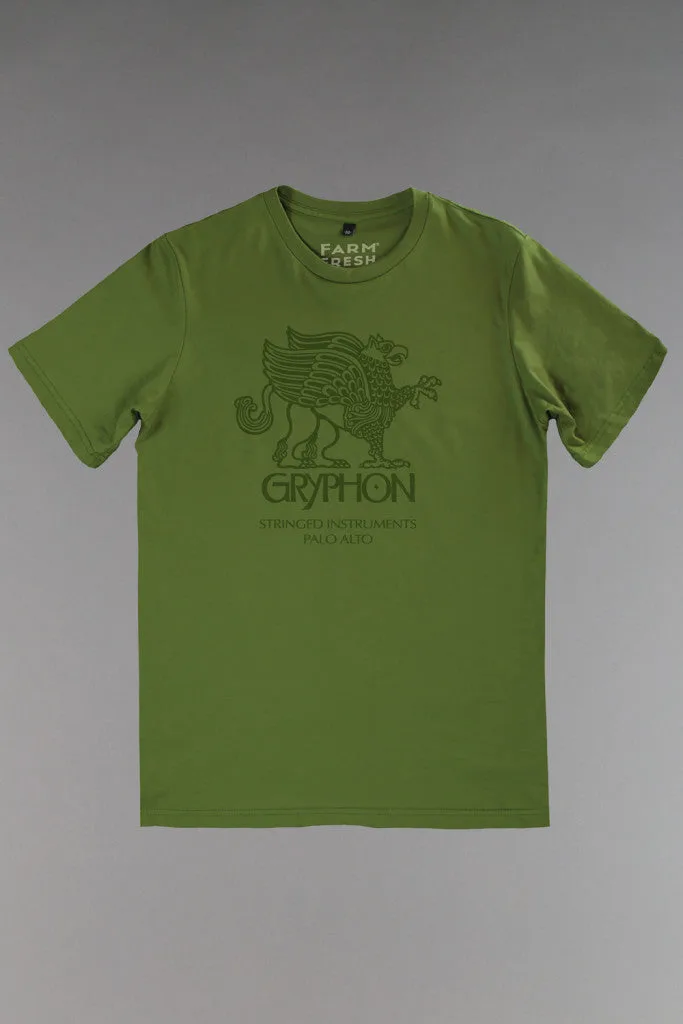
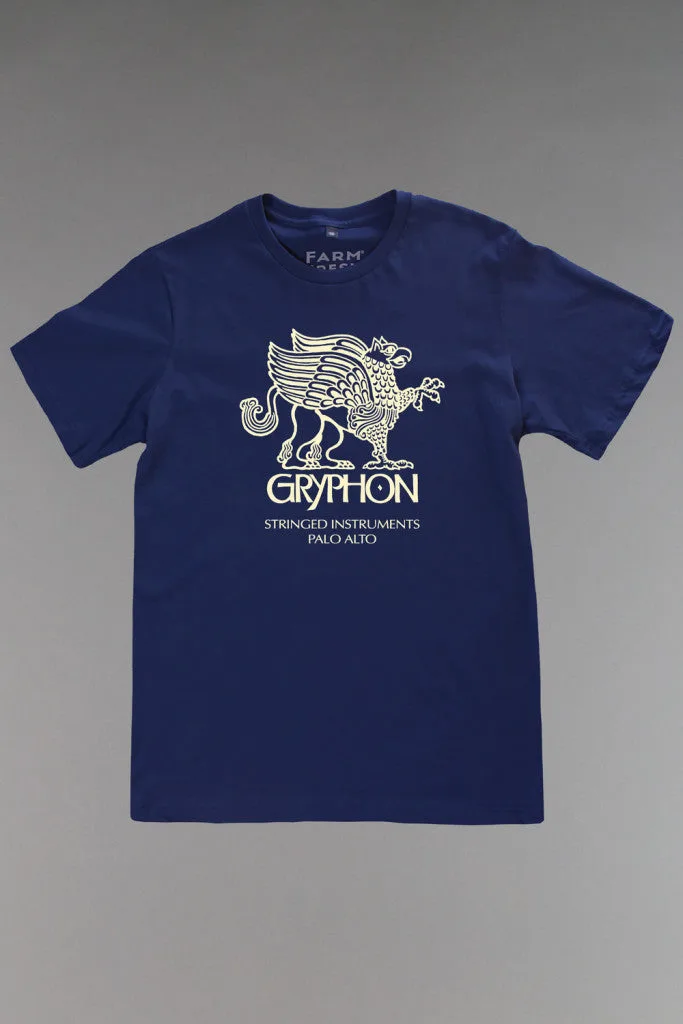
We decided to upgrade the classic Gryphon T-shirt and figured if we’re going for 100% cotton made in the U.S.A., why not step up and get the best out there? These shirts are from Farm Fresh in Sebastapol, and are 100% organic cotton, made right here in California and printed with eco-friendly, water-based inks. They’re incredibly soft but still hold their shape, the printing is top notch, and of course they get even softer with repeated washing. Available in true black, navy blue, olive green, and charcoal. 6 sizes, Small, Medium, Large, Extra Large, plus 2XL and 3XL. Small through Extra Large are $25, 2XL and 3XL $27.
Taylor Neck Repair
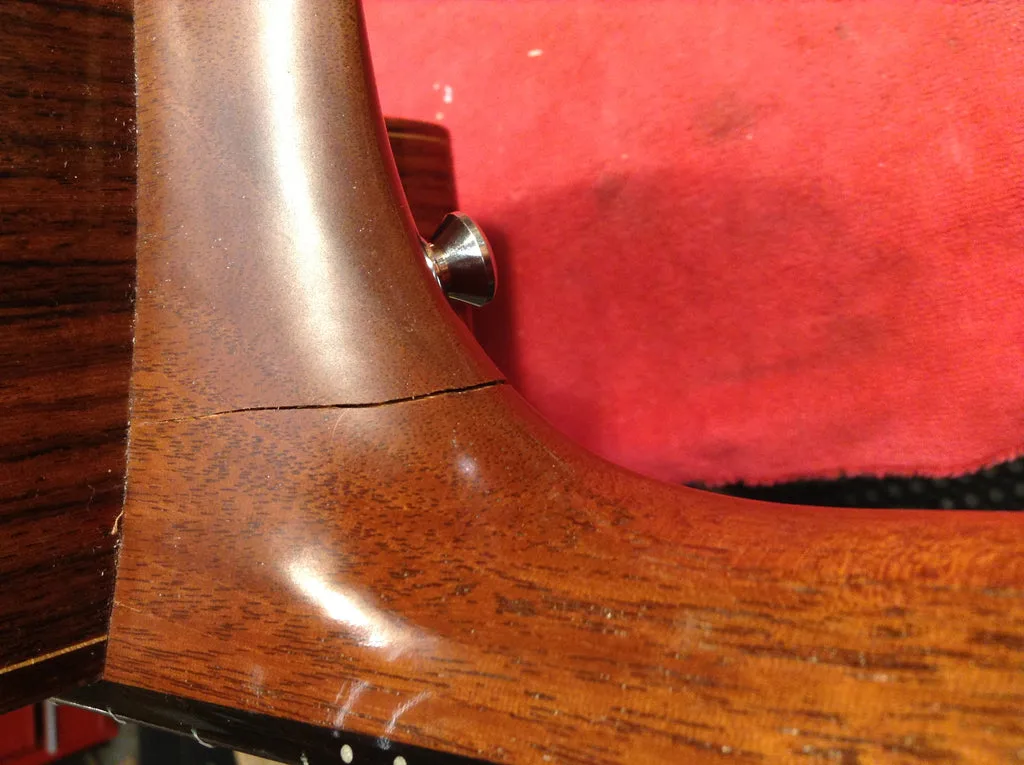
Here’s a Taylor that lost a fight with a car backing up. The heel split right in the middle, take a look.
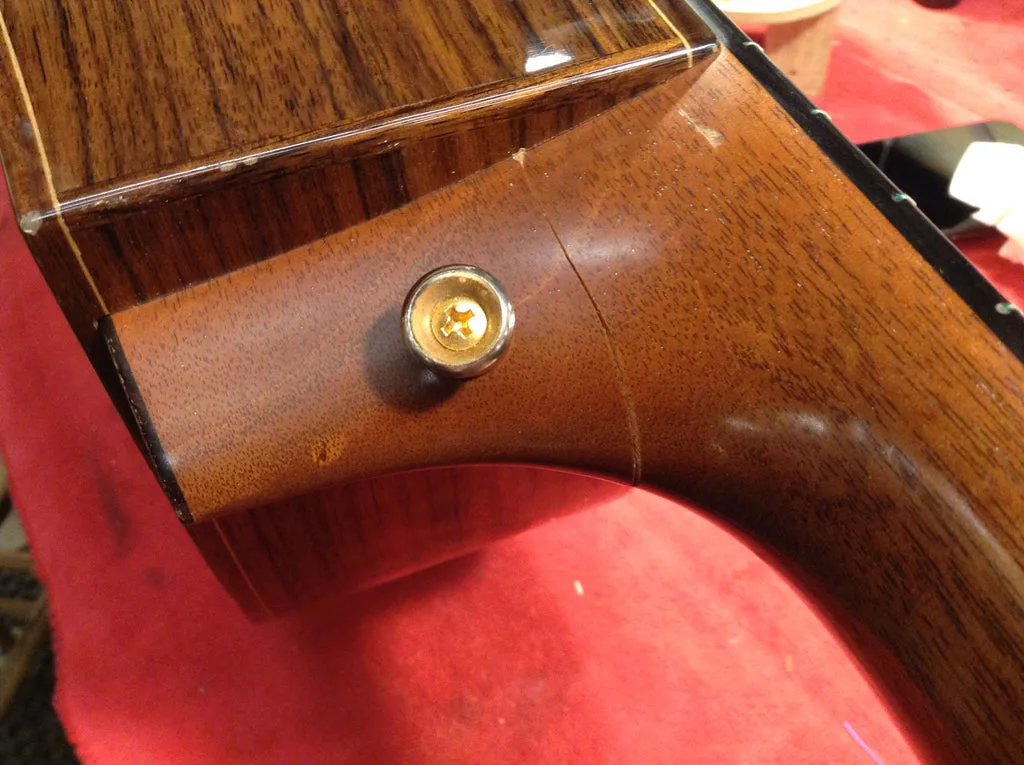
Modern Taylors like this one have bolt on necks, so the advantage here is to loosen the bolts and remove the neck in order to do the repair. Here you can see the heel has two longer bolts that go through the neck block into the heel. There’s also a short bolt that holds on the tongue (or end of the fingerboard).
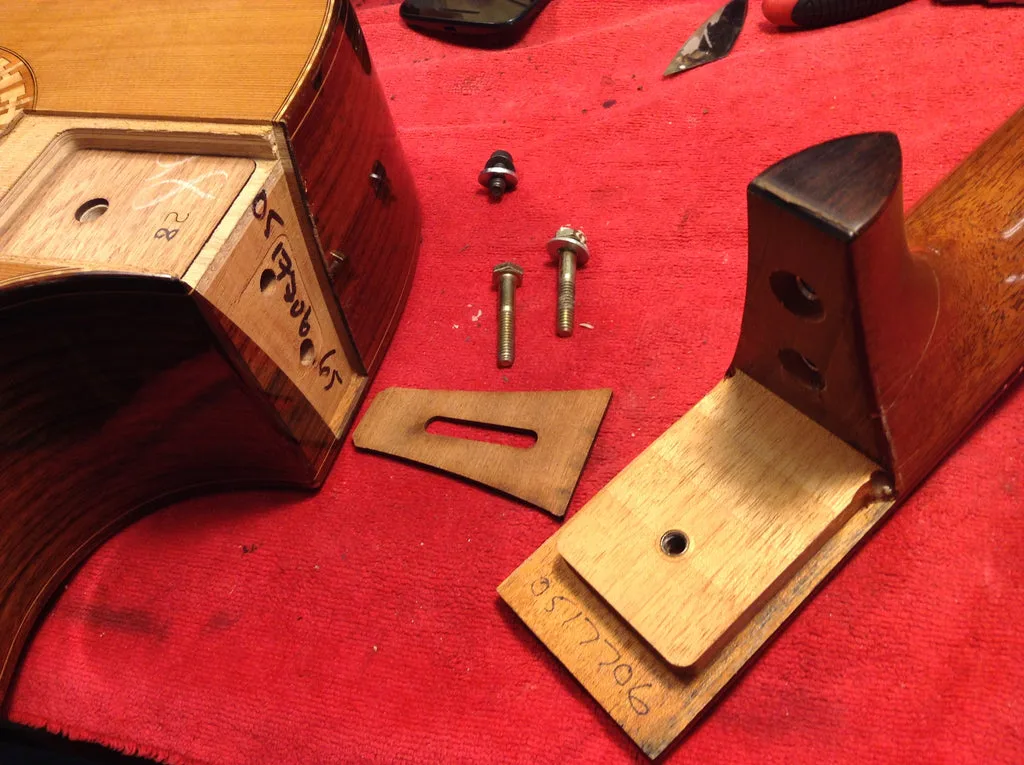
Now I have the neck off, the heel fell apart into two pieces. This is a cool break, just to display how these necks are put together. The threaded insert is right where the crack happened, and as a result the two pieces go back together really nicely when the insert is used as a pin.
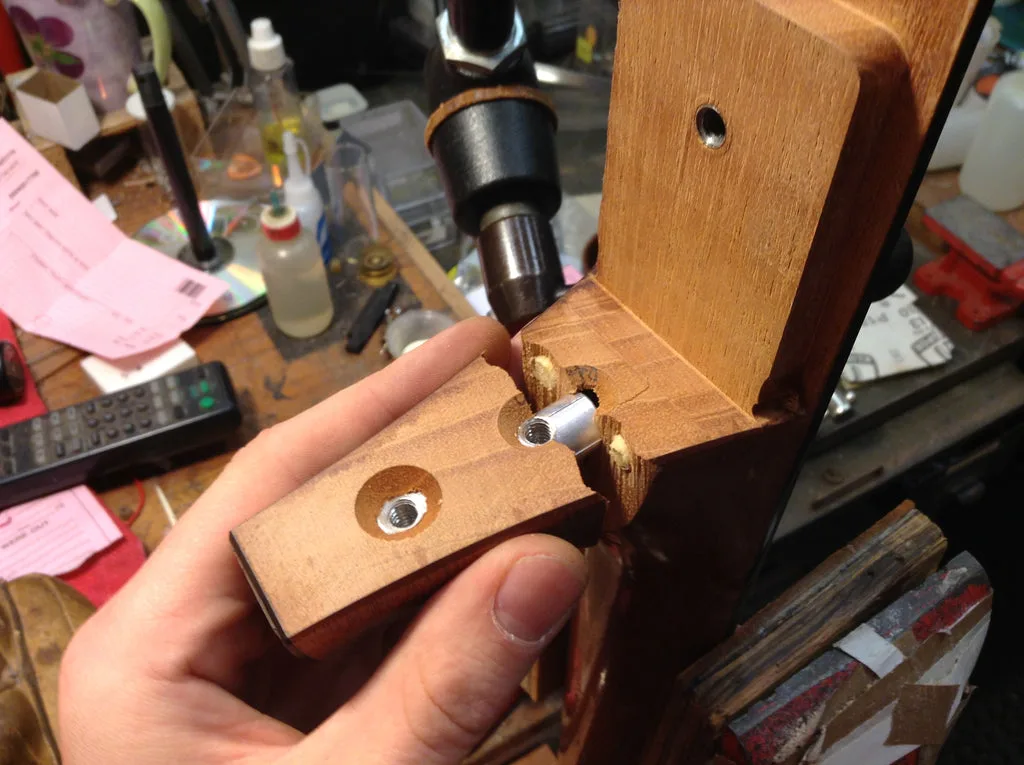
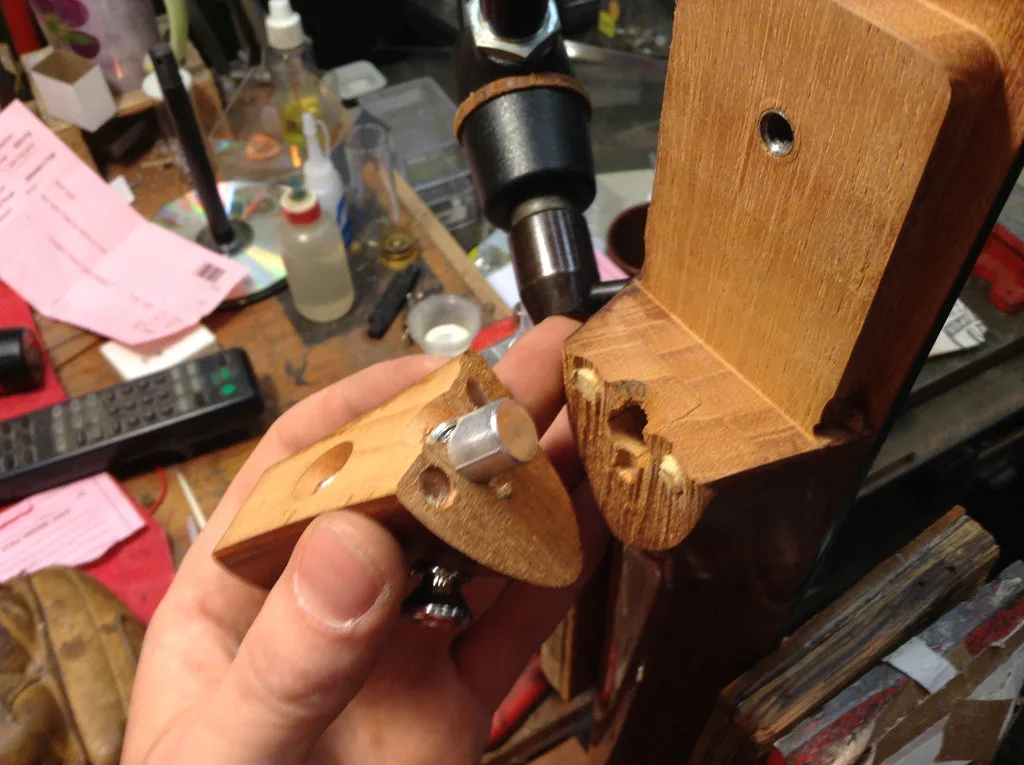
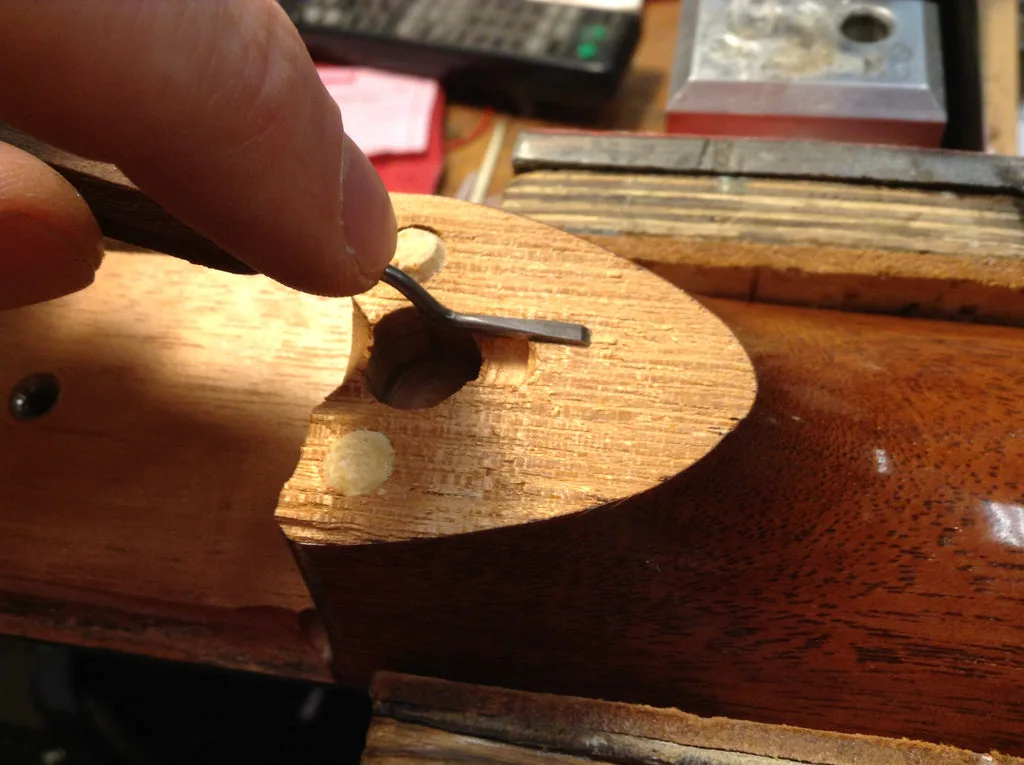
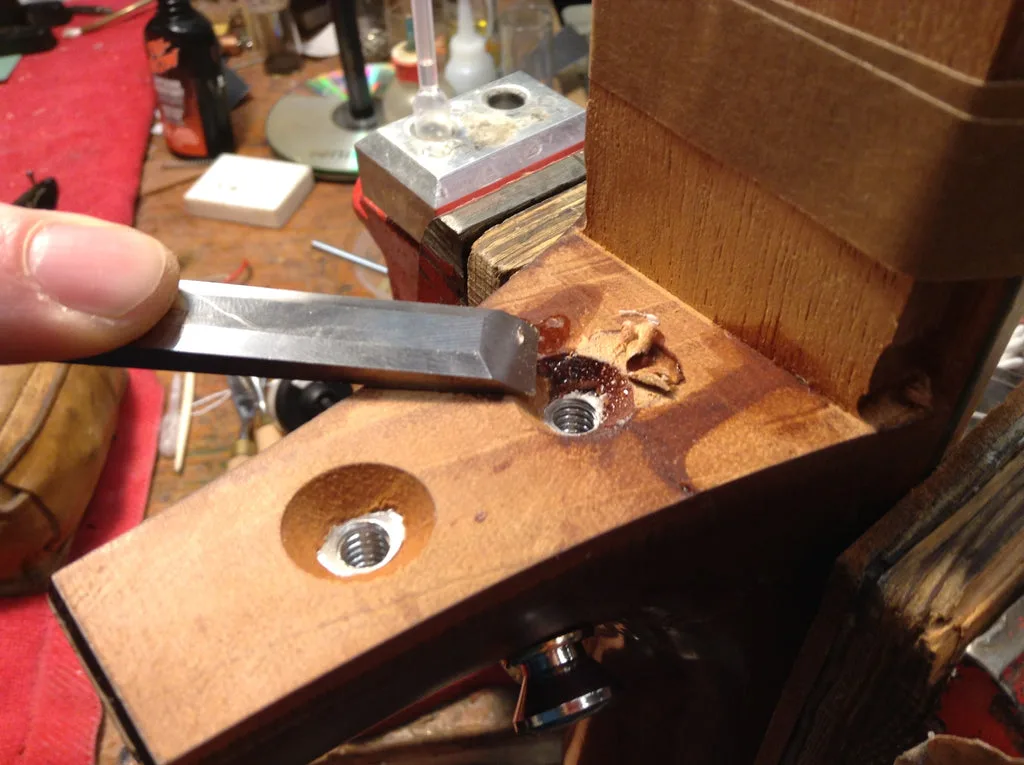
Before I glue it up, i’ll clean up any wood fibers that are going to prevent a good alignment. Here i’m using a micro chisel.
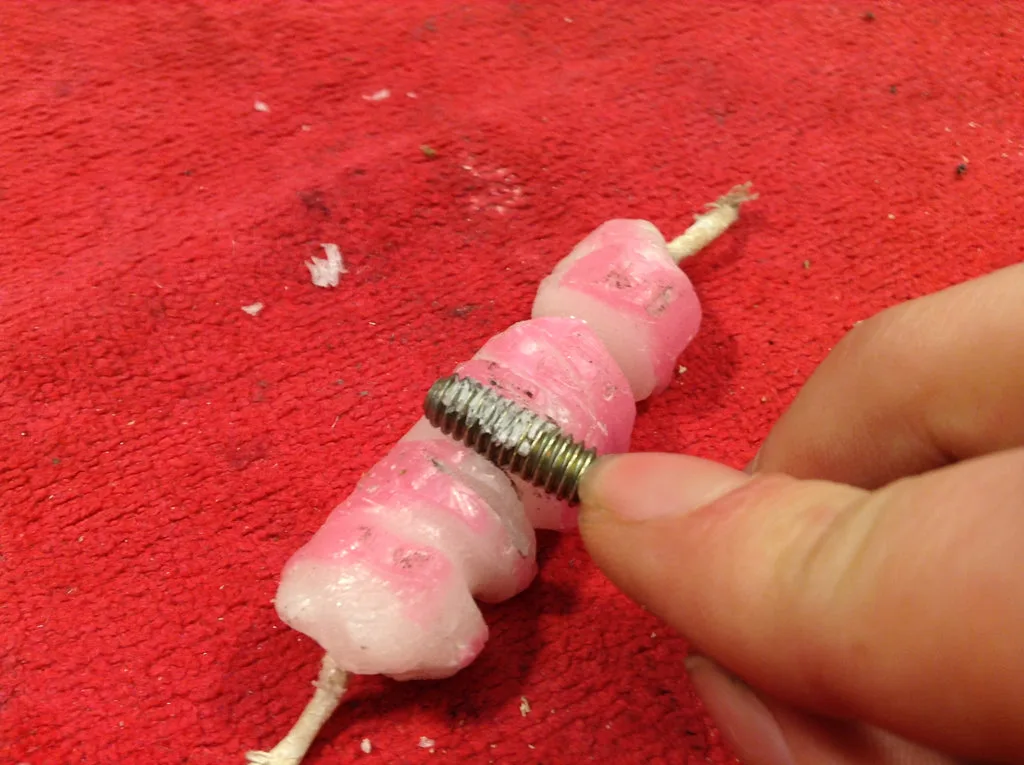
I’m going to use epoxy for this repair, so I mixed up a batch and got my brush ready. To avoid getting epoxy in the threads of the insert, I put wax from this old candle on one of the bolts and threaded it in. This will make sure I can get it out again and keep epoxy from seeping in.
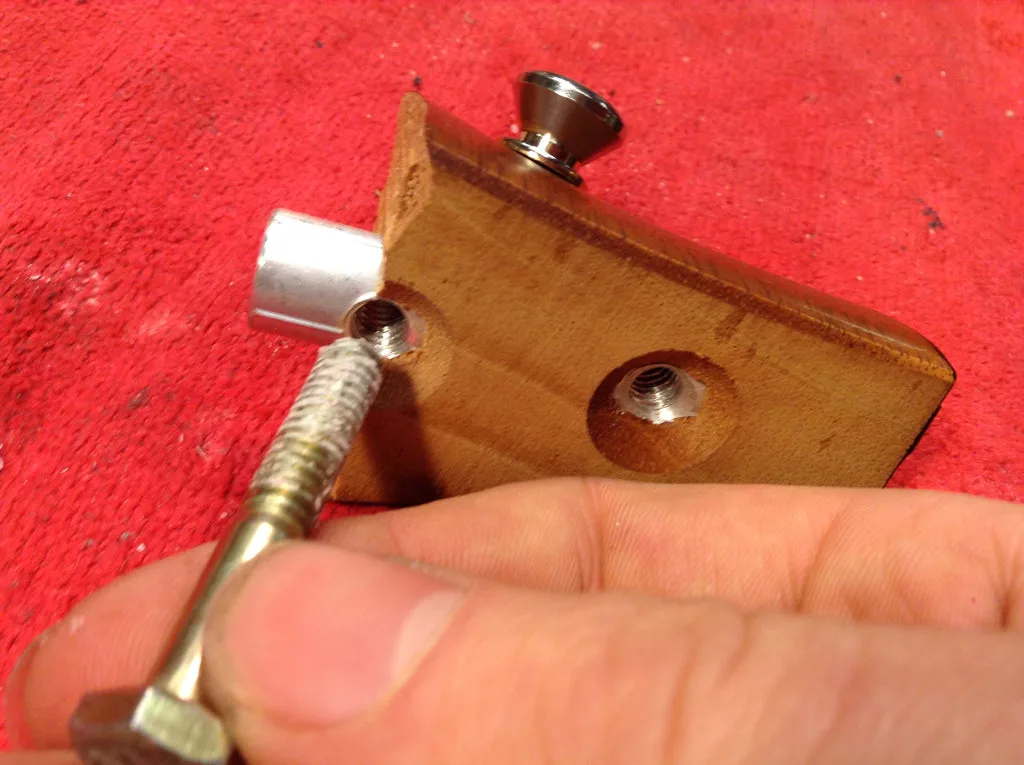
An aluminium caul protects the fingerboard from the clamps. Frank machined this out so the caul sits directly on the wood and doesn’t dent the frets or the wood. For the heel cap I taped on a small leather caul.
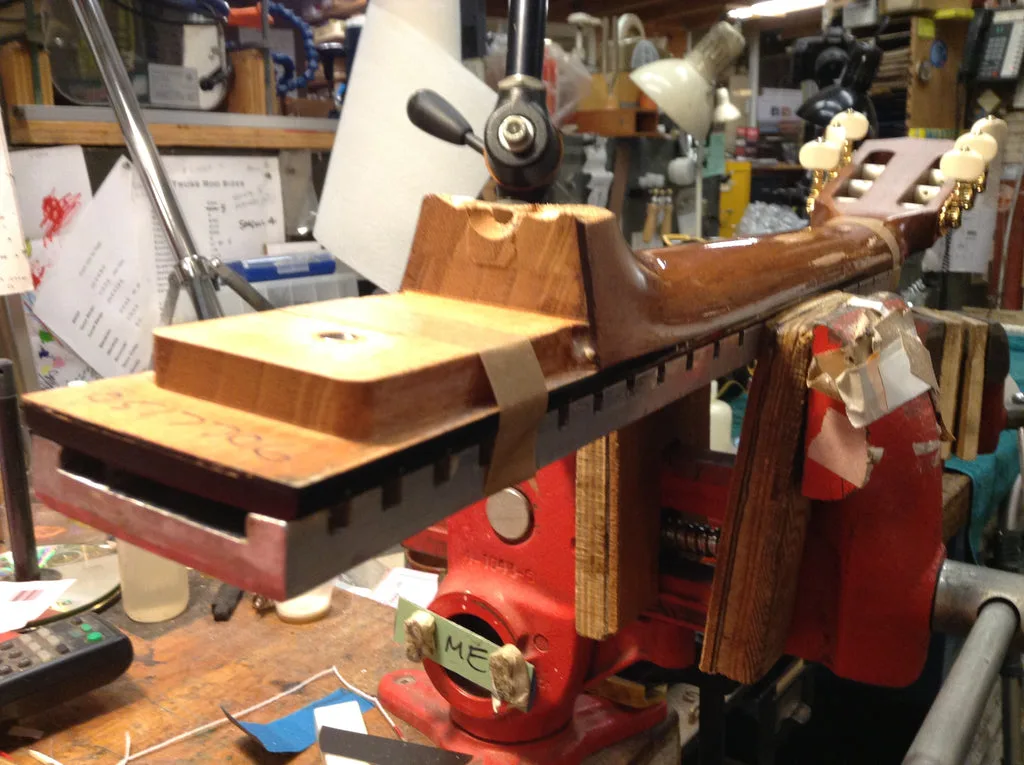 Now I brush on the epoxy and clamp it up.
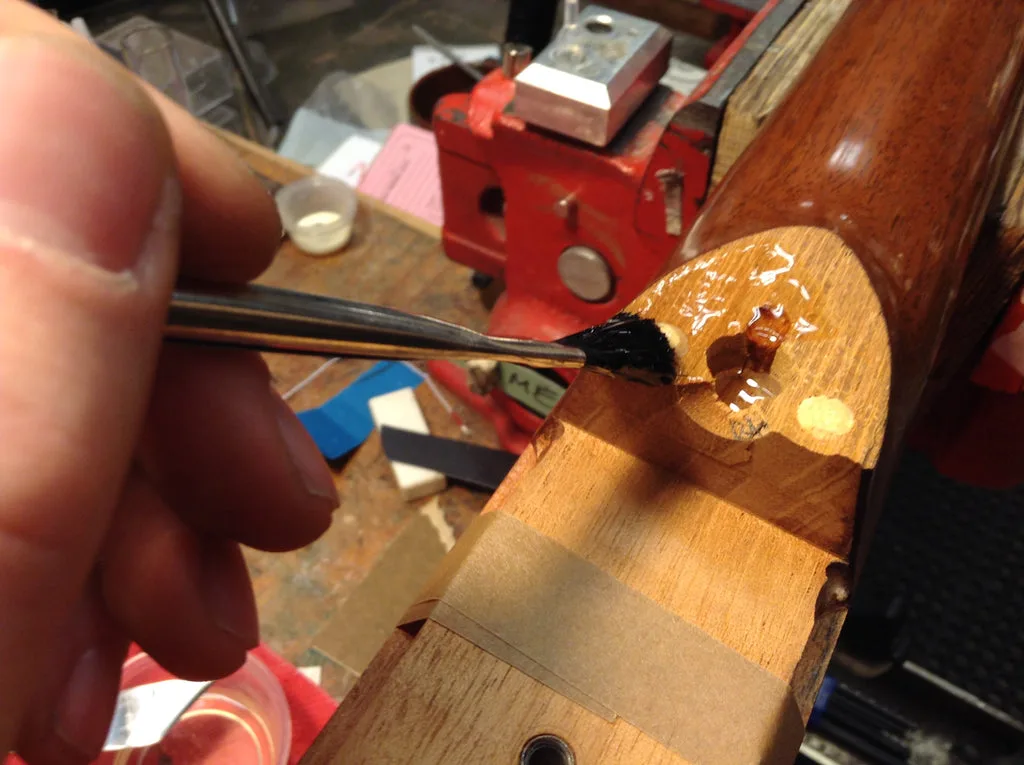
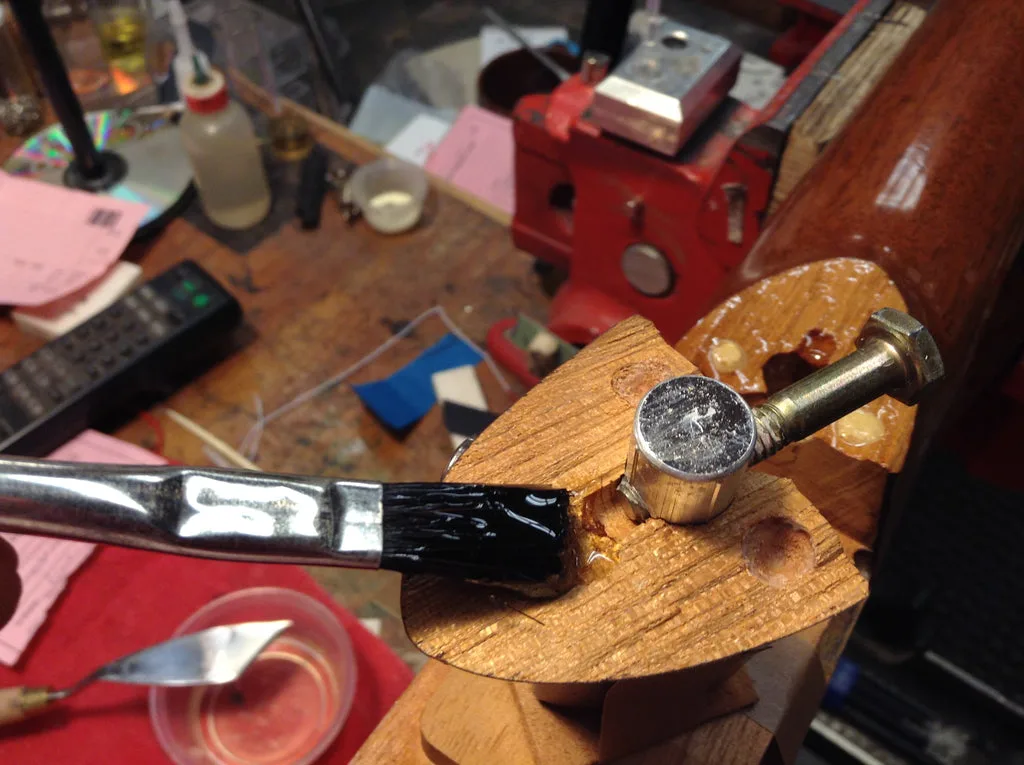
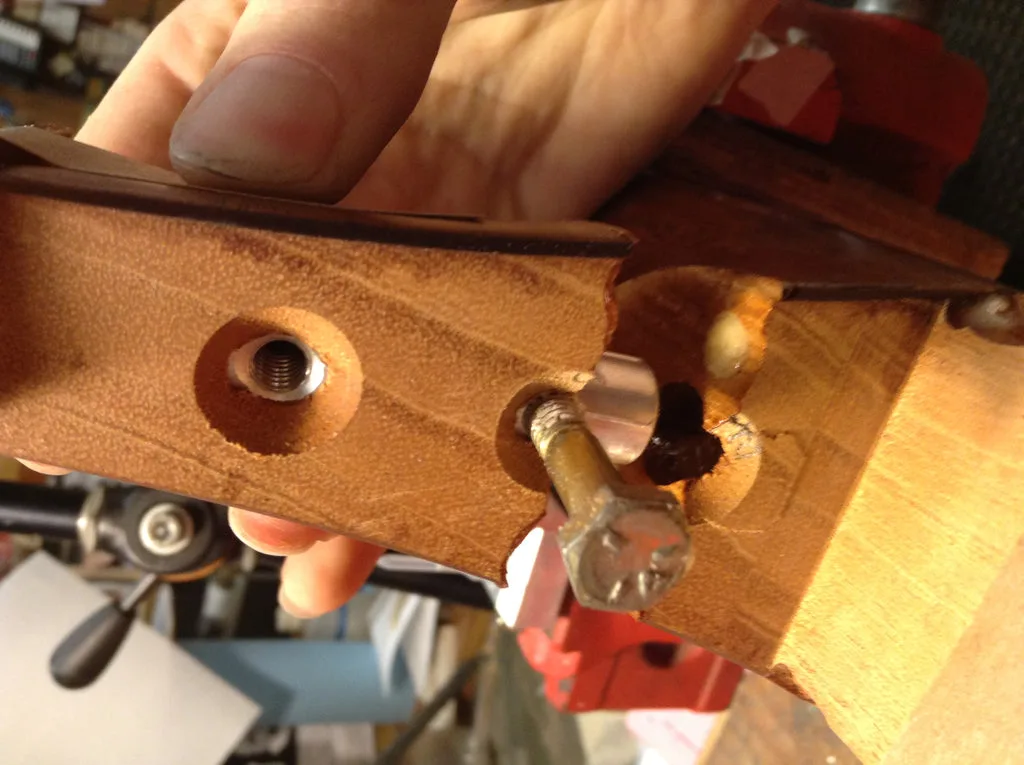
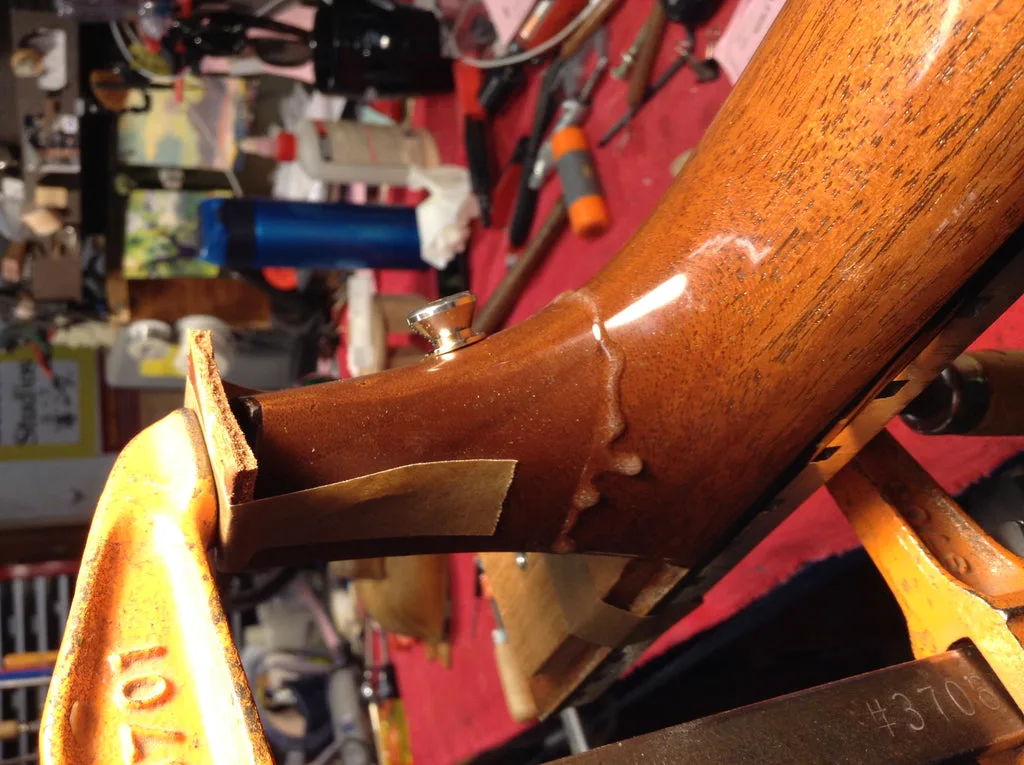
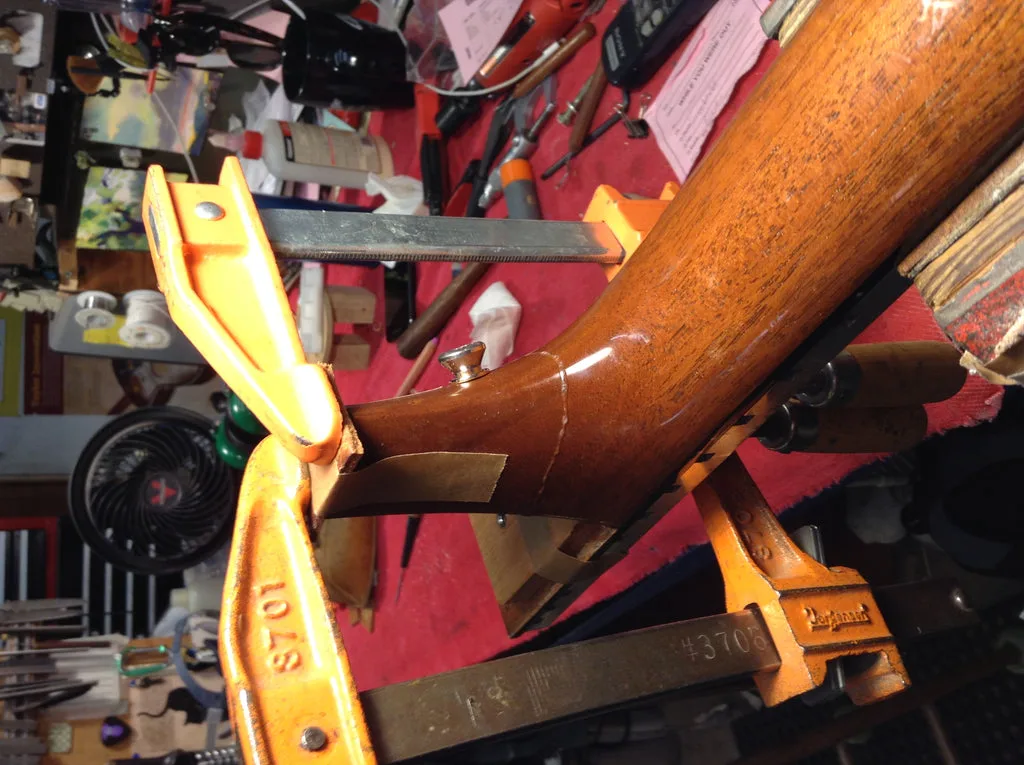
After wiping off the squeeze out, I put it aside for 24 hours or so. The clamps come off and then I need to do a little cleanup with a chisel to get off the excess epoxy on the underside. This will make sure it fits back in the neck pocket nice and tight.
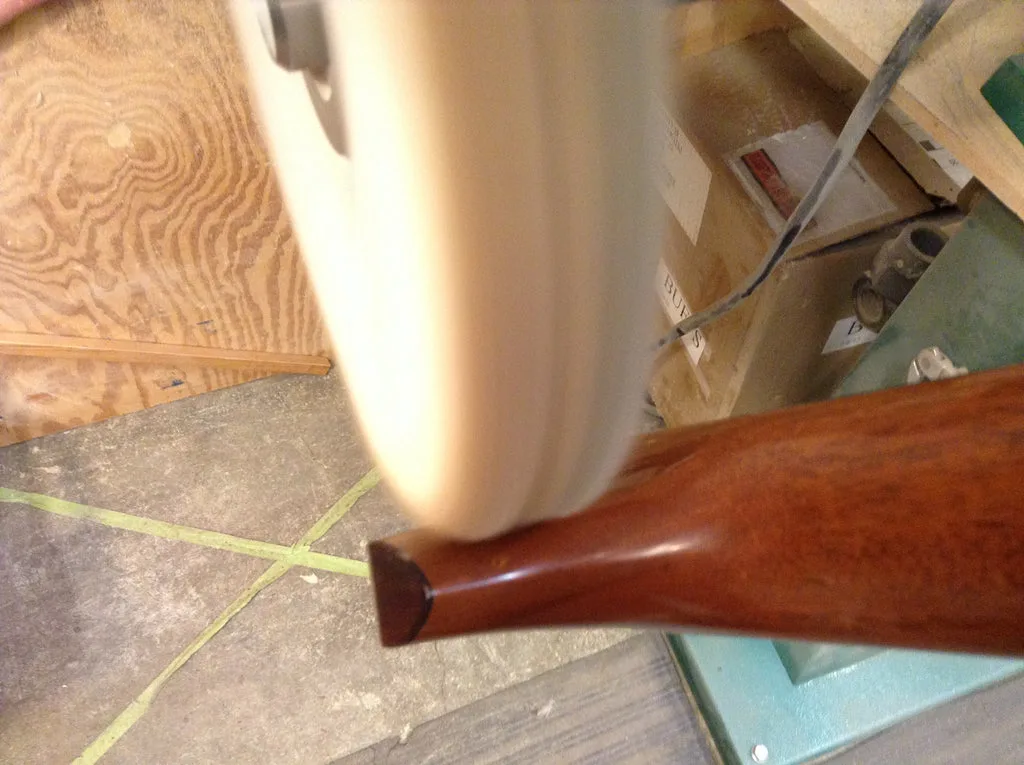
I did some very light sanding on the finished side of the heel and gently buffed it, with the wheel at the low speed.
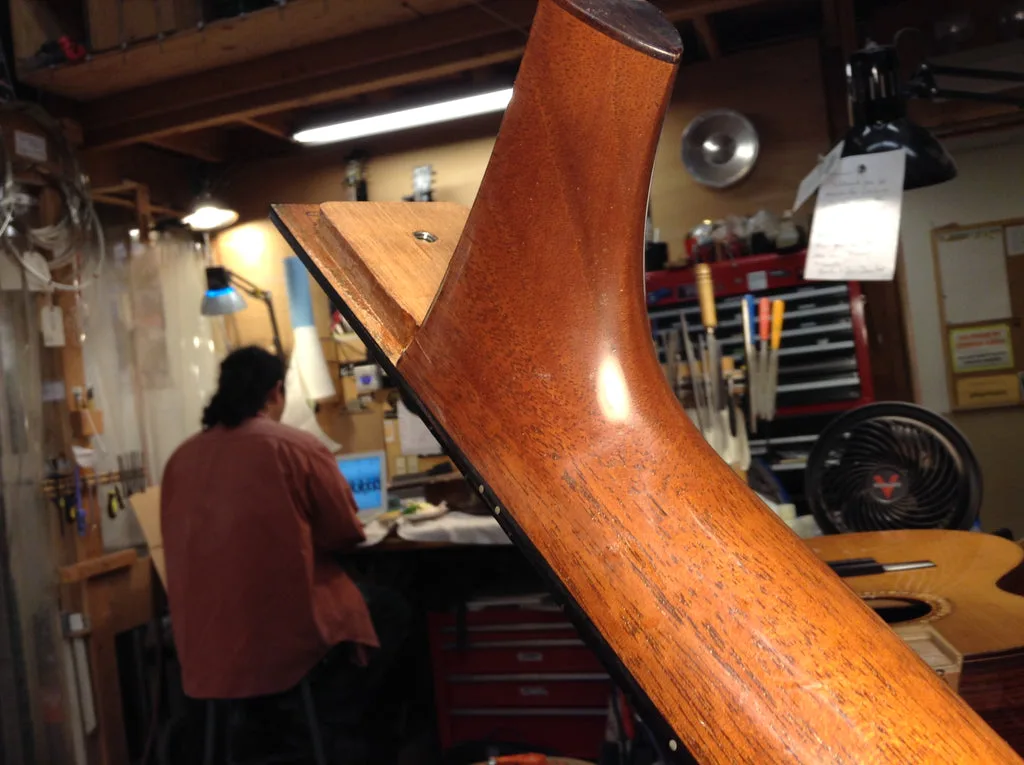
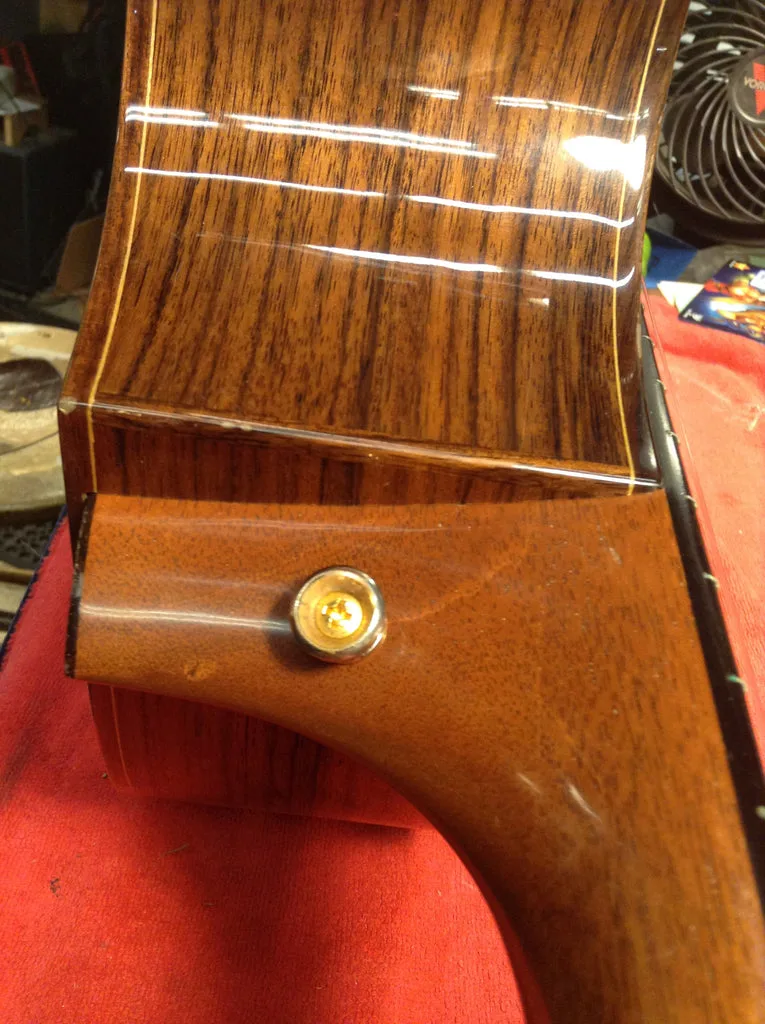
Came out pretty good.. I’m not trying to hit Michi by the way.
Huss and Dalton Guitar Company
The story of the Huss and Dalton Guitar Company began when Jeff Huss moved from North Dakota to Virginia in 1984 in search of good bluegrass music. Once there, he quickly found a job working at the Stelling Banjo Works where he spent his days building banjo necks. After hours he spent his time in his home workshop designing and building his own guitars. He built one for his boss Geoff Stelling who liked it so much he added guitars to the Stelling line and had Huss build them. After making around a hundred, Huss decided to set out on his own in 1993. Around this time he met Virginia native Mark Dalton at a jam session. Mark Dalton was a fine musician, but more importantly, he was also an expert in finishing processes. The two men decided to pool their talents and in 1995 the Huss and Dalton Guitar Company was born.
Over the years Huss & Dalton has earned a reputation for building great sounding, meticulously crafted instruments. The guitars, which are built in Staunton, Virginia are inspired by the classic designs from Nazareth and Kalamazoo, but built with a distinct Virginia flair. The braces for each guitar are made from hand split Appalachian spruce, which they feel gives their guitars an excellent bass to treble balance. They use nothing but the highest quality quarter sawn tonewoods for the top back and sides. Here at Gryphon, their dreadnoughts are quite popular, and the rich, full tone combined with plenty of punch and projection make them perfect for bluegrass. Huss and Dalton’s smaller guitars, like the OM and the 00, are also well liked.
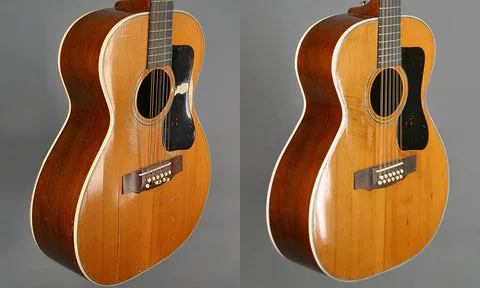
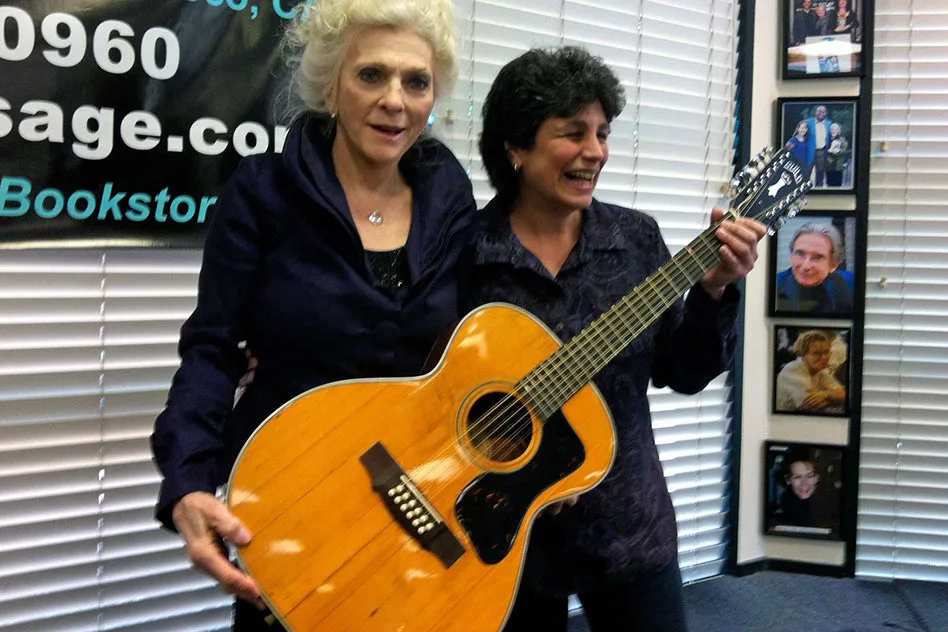
Restoring Judy Collins' Guild 12-String
“If I buy this guitar, can you restore it for me?” Now, there’s a question that ordinarily strikes fear and panic into this old heart of mine as I try to find some nice polite weasel words to get me out of actually answering.
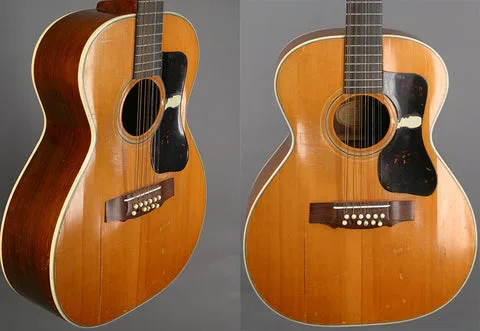
But this time was different – it was our friend, Lisa Sanchez, asking with a real sense of anticipation in her voice. She’d just shown me a tiny online photo of a guitar on an auction Web site. It was one of several owned by Judy Collins, a 1968 Brazilian rosewood Guild 12-string. Lisa went on to spin a compelling tale of how Judy had been so important in her early interest in guitar playing back in the day. She’d followed Judy’s work and career closely, and as so many others, was influenced by her all along the way.
“Well, I dunno – even from that teeny picture, you can see the top is all cracked up, and there’s no way to know what’s left of the rest of it – but maybe.” For sure it would be a REALLY big job.
“What do you think it might cost?”
I hoped she wouldn’t ask that one, “No way to know at this distance – maybe it can’t even BE fixed.”
“OK, well I’m going to go for it, and if it sells for what I can afford (not much) then I’ll just hang it on the wall if you can’t restore it. That way, I’ll still have my piece of my hero, Judy Collins. But if you can…”
Wouldn’t you know it. All the other guitars went for pretty high prices, but this most iconic one actually took a trip to live at Lisa’s house! It is, after all, the one featured in so many situations, recordings, concerts, album covers, photos and all. It still even has the strap Judy used for so many years with the little decorative tassel things hanging down.
And, wouldn’t you know it, I got drafted. After looking it over carefully, I finally decided it was appropriate for me to dig in and give it a good effort. Lisa was clear that she didn’t want to change its appearance or lose any of the mojo of such a world traveler. In other circumstances, replacing the top might well have been the logical choice, but not this time!
Lisa Sanchez is a San Francisco based professional guitarist and teaches here at Gryphon, so as I started to work on the guitar, she was on hand to see the slow progress as I worked on it. Terrible cracks ran the length of the top, and all the top braces had been broken and/or knocked loose. Cracks in the back, through the end block, terrific fret wear, neck angle issues, broken bridge, and a decomposing peghead veneer didn’t help a bit, either.
All in all, this was big fat restoration job, and the cost would exceed the “cash value” of the guitar many times over. But that wasn’t the point. Most importantly for me it was a mighty rewarding project because of what the instrument represents in our music world, and especially what it means to Lisa.
— Frank Ford
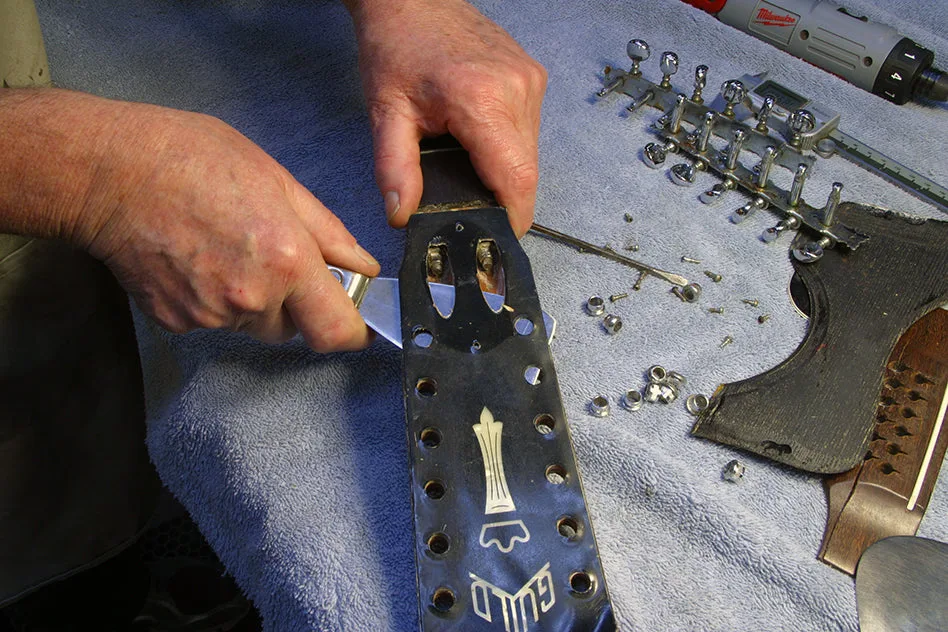
Lots of disassembly needed, and here I’m removing the decomposed plastic peghead overlay – I’d be making a new one, with new inlay work. Off to the side: tuners, pickguard and broken bridge.
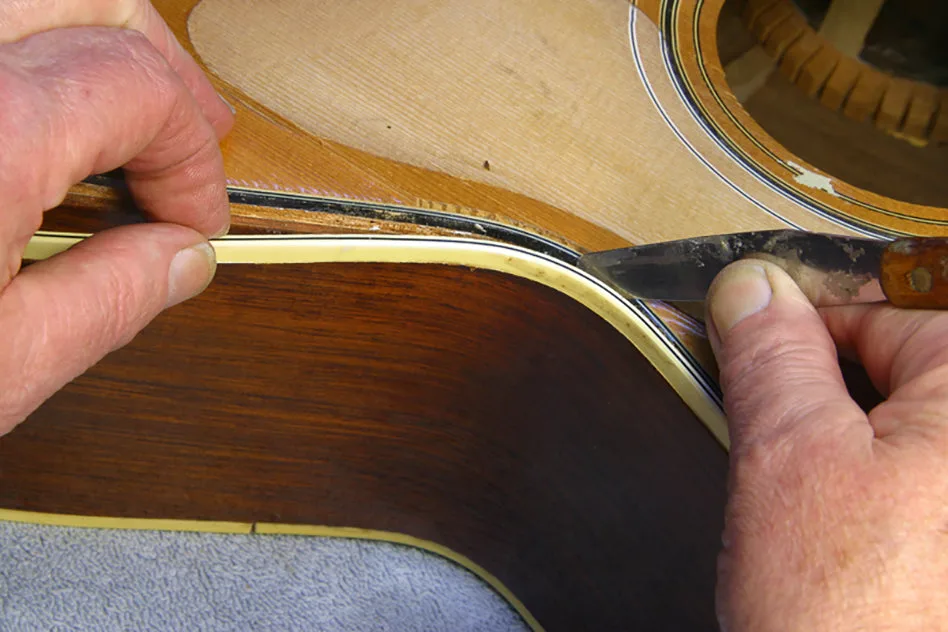
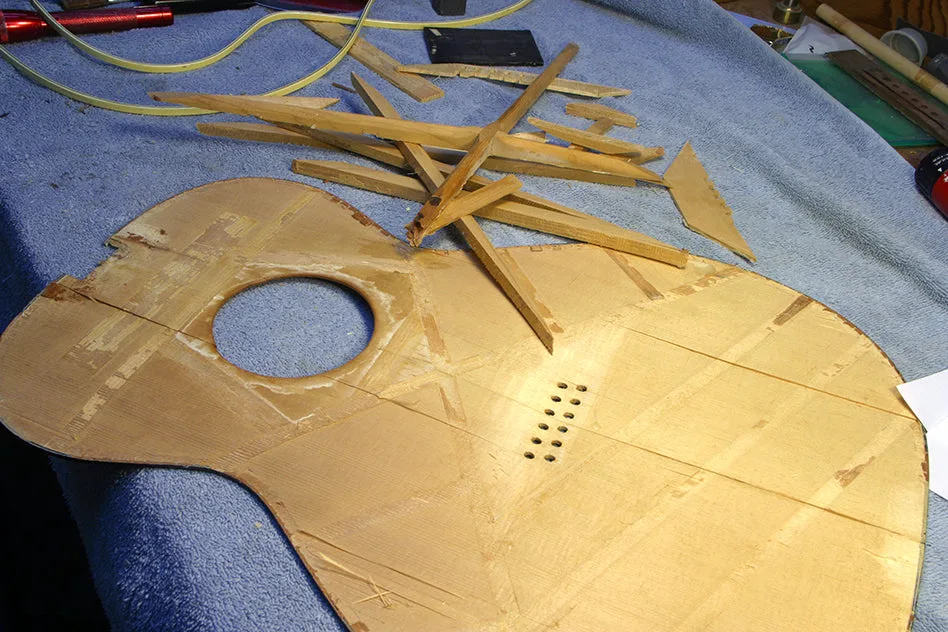
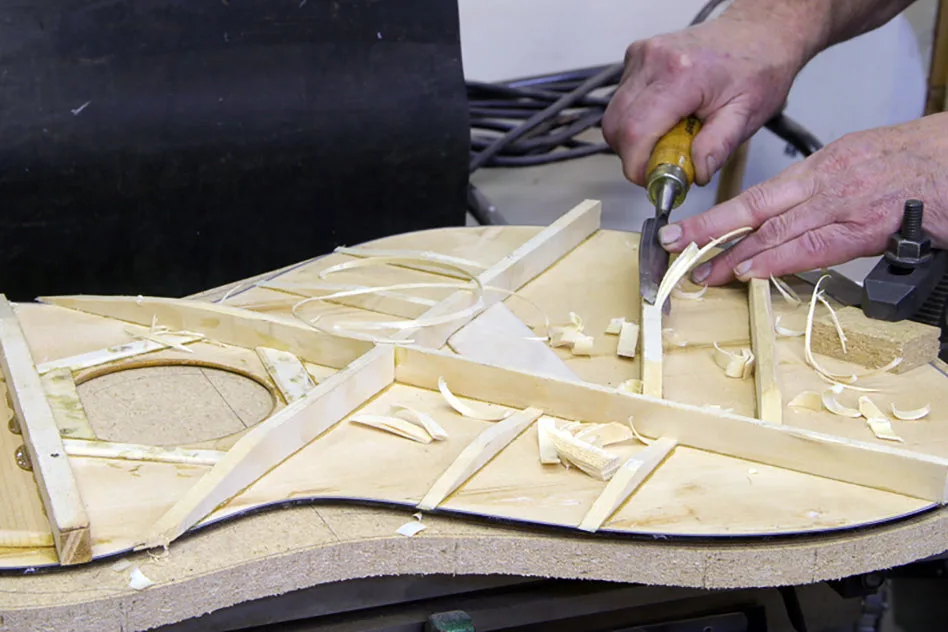
I made replacements for all the top braces, glued them in position and formed their contours with chisel and sandpaper.
It’s customary to install nice little reinforcement patches or “cleats” to reinforce top cracks, but I didn’t want to influence the flexibility of the top too much, so I made sure to use the thinnest, lightest reinforcement I could.
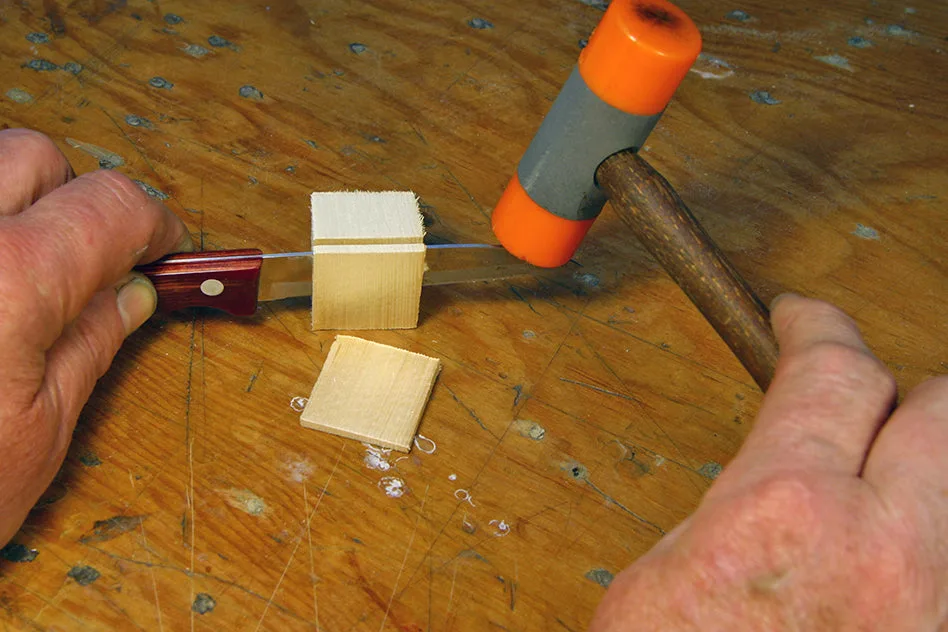
In order to make those thin pieces, I split them from solid spruce stock to be certain that the grain direction would be exactly parallel to the surface, minimizing the possibility of breakage in service.
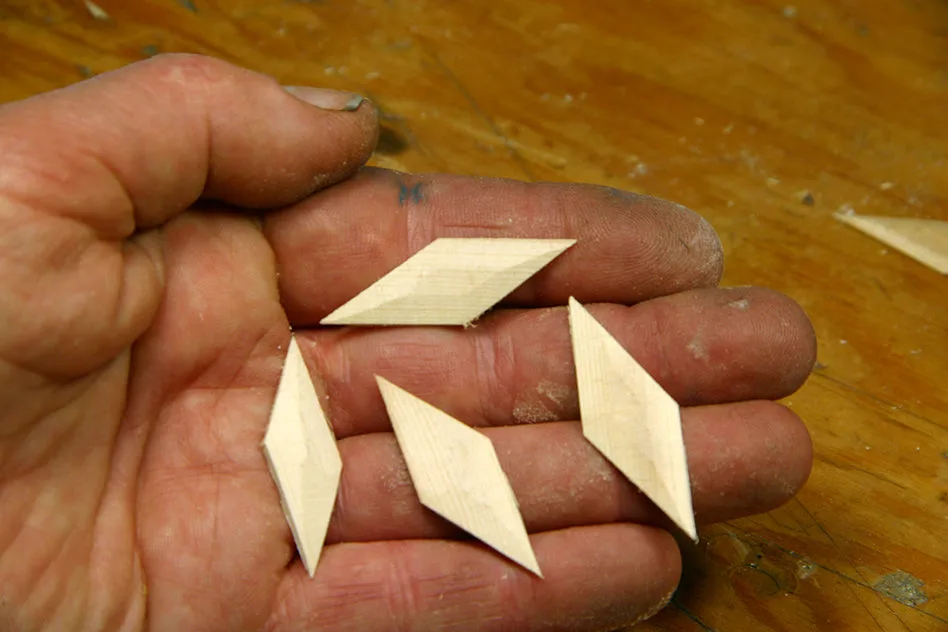
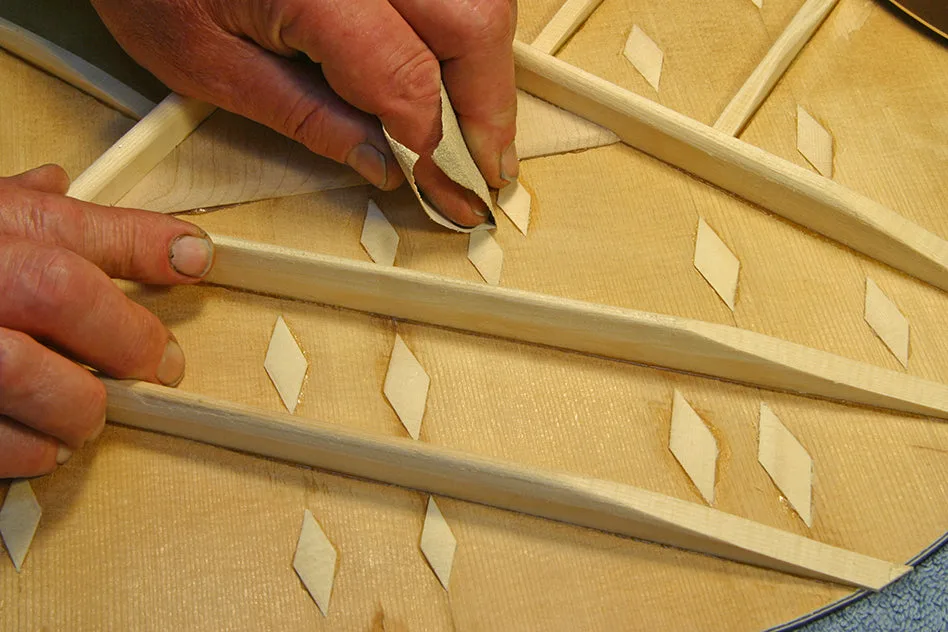
It’s nice to have the assurance that the top is now flexible and strong, despite the large number of cracks.
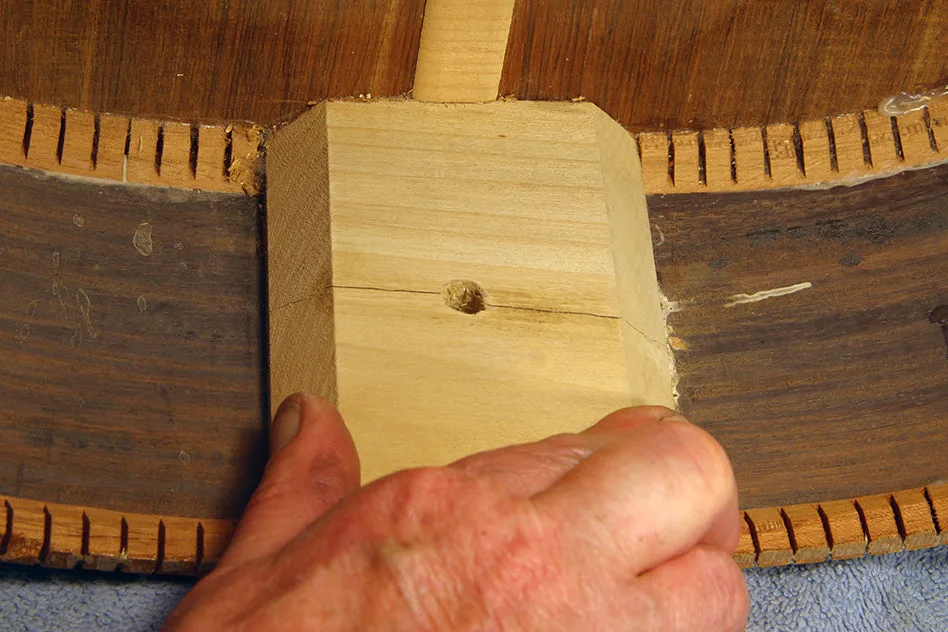
All around inside the guitar there were other bits of damage, like this big crack through the end block – probably a result of dropping the guitar on the end pin. The pin fits into a tapered hole, and if it gets hit hard enough it can split even such a heavy piece of hardwood.
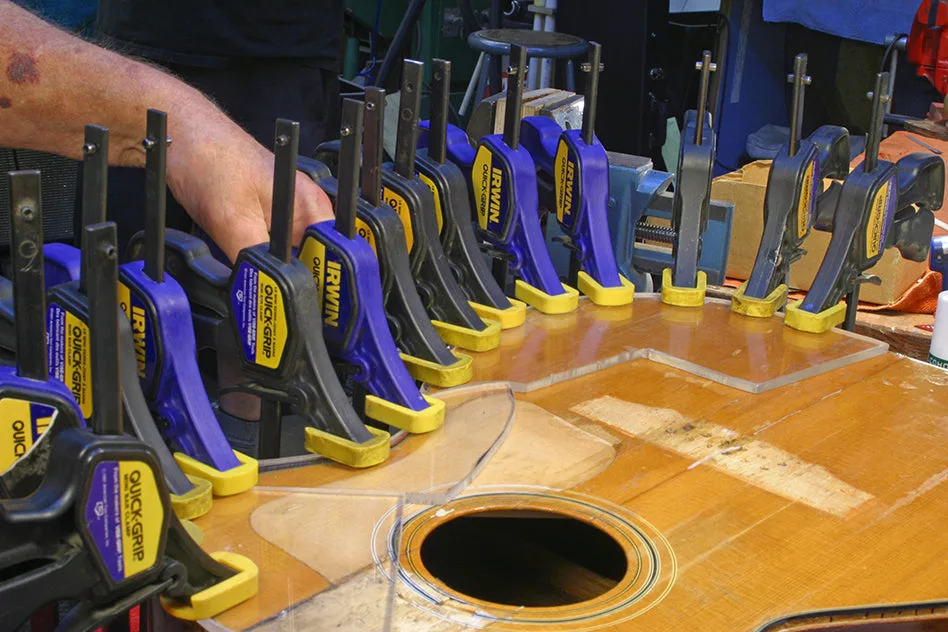
Finally, after all that interior work it came time to put the body back together again – I glued half at a time to avoid any misalignment.
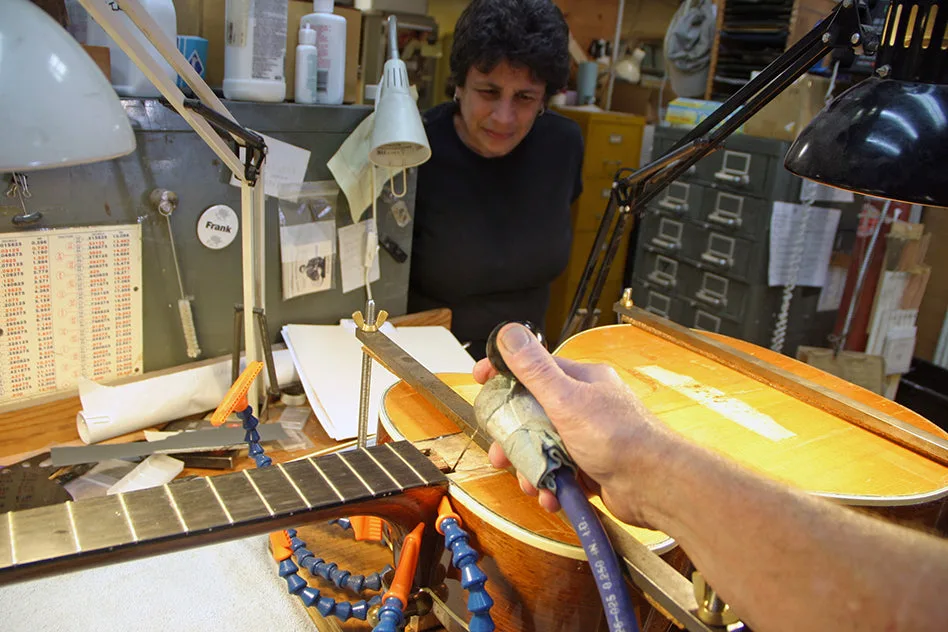
On and on the work went for a total of several months – that’s Lisa in the background, keeping me honest…
Neck removal and resetting, fingerboard leveling and refretting, peghead veneer replacement, and setup followed as things took shape.
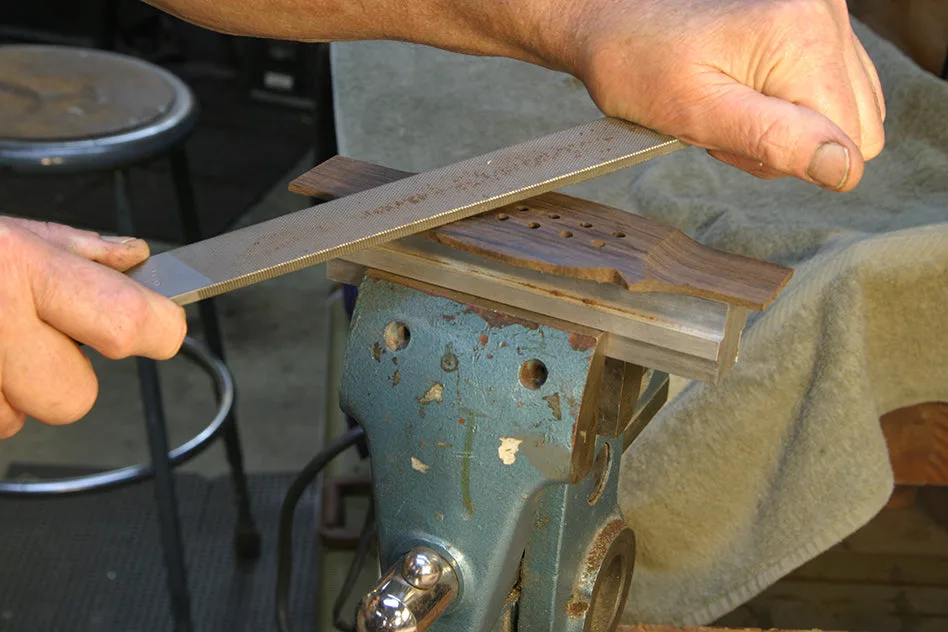
I reproduced the original broken bridge with one I carved from Brazilian rosewood.
1960's Hofner Beatle Bass neck reset…
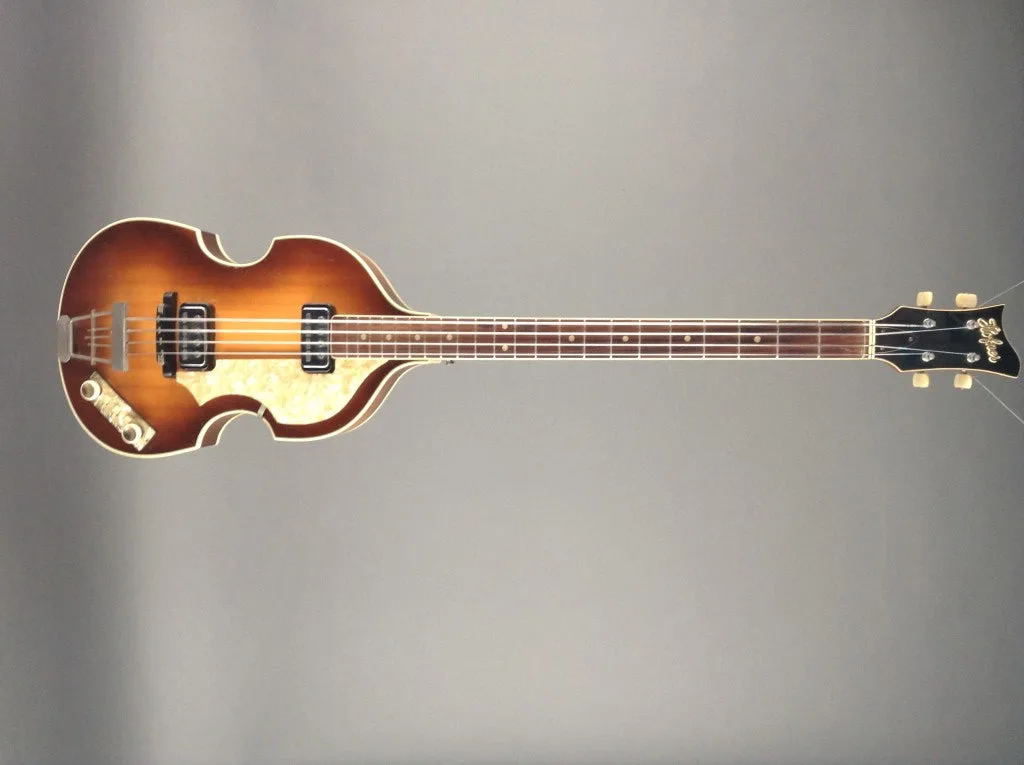
A very cool 60’s Hofner Beatle bass landed on the repair counter recently. The owner explained that the neck fell off when he last took it out of the case. There were no signs of trauma, just tired and dried up glue in the pocket and on the heel of the neck.
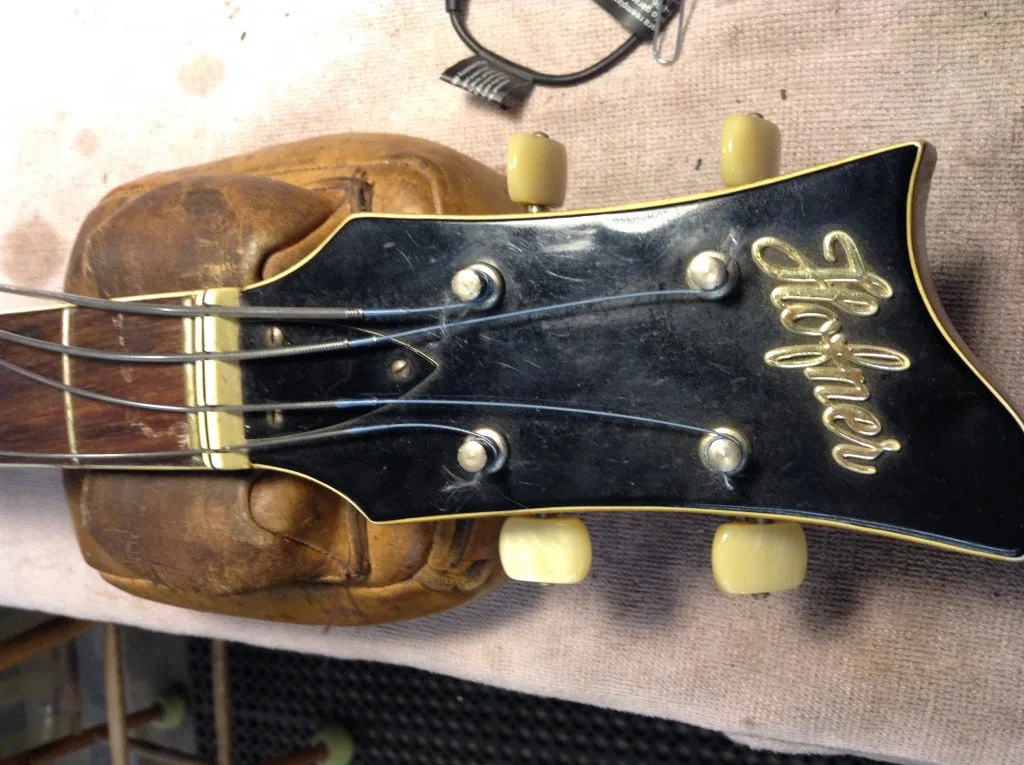
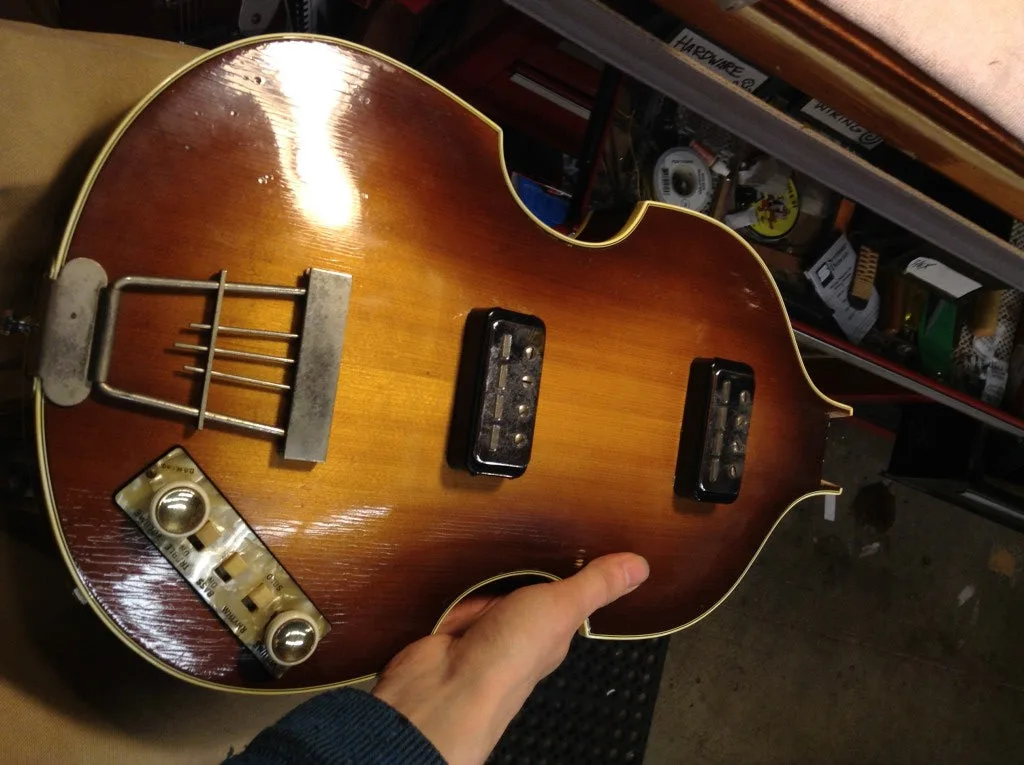
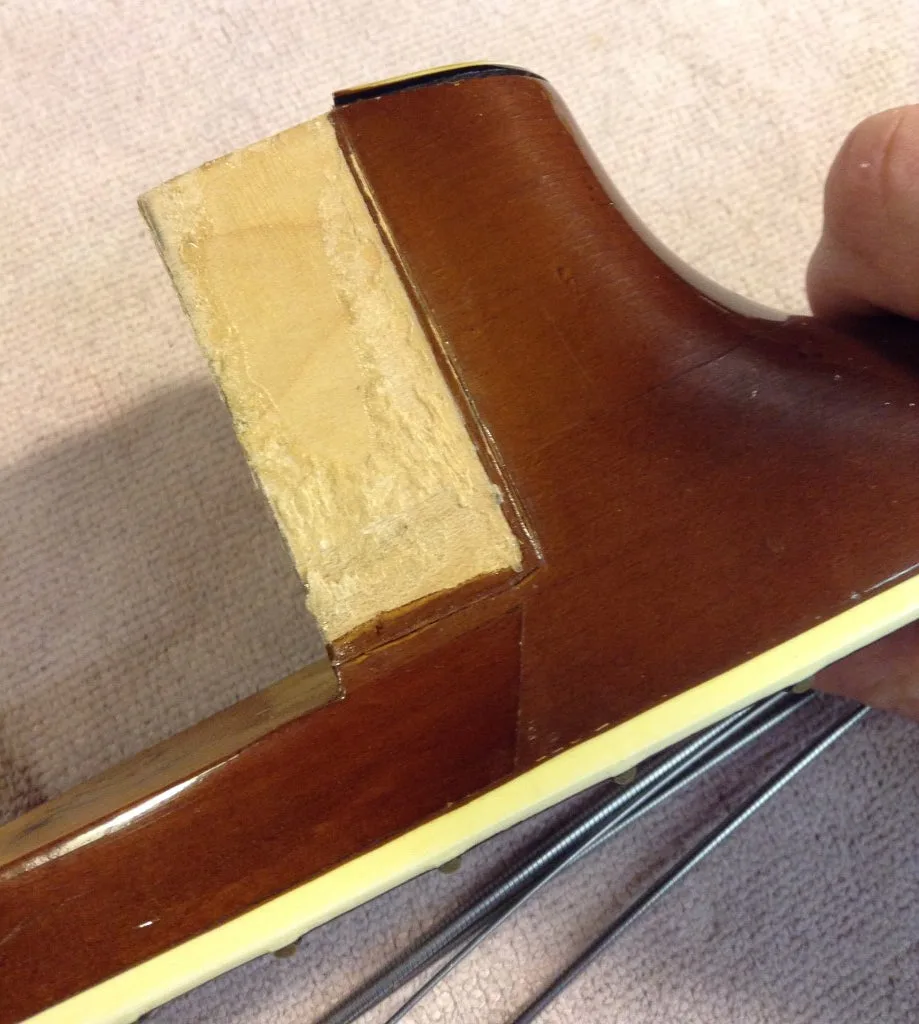
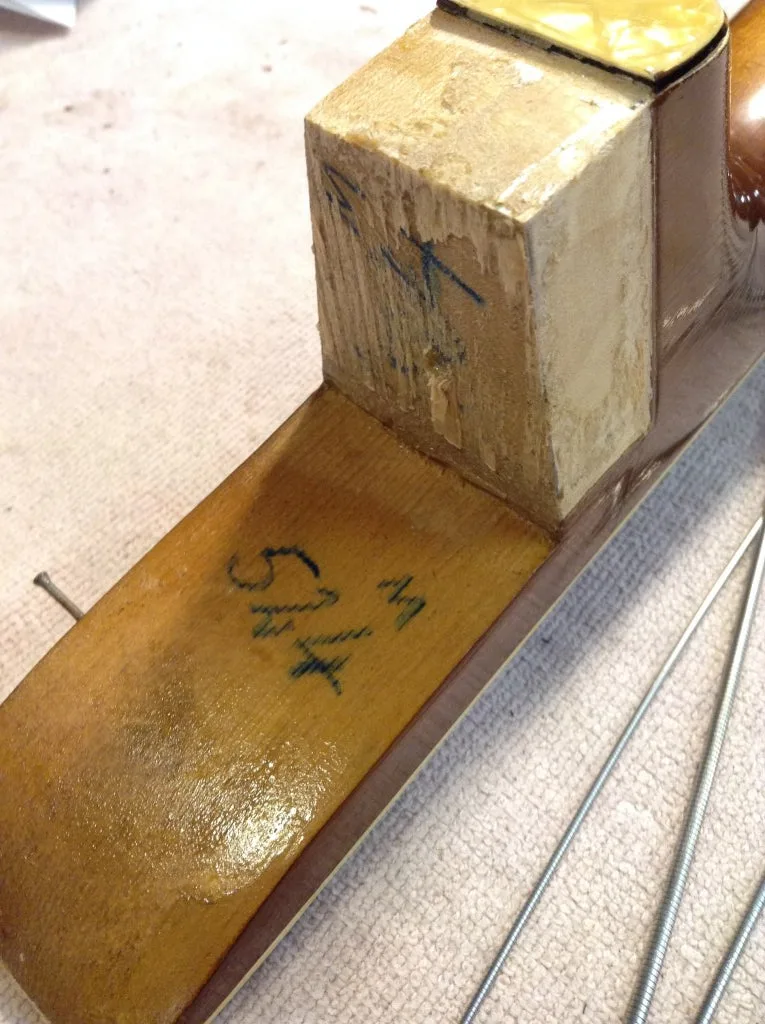
I took it in for a neck reset and proceeded to clean off all the old hide glue.
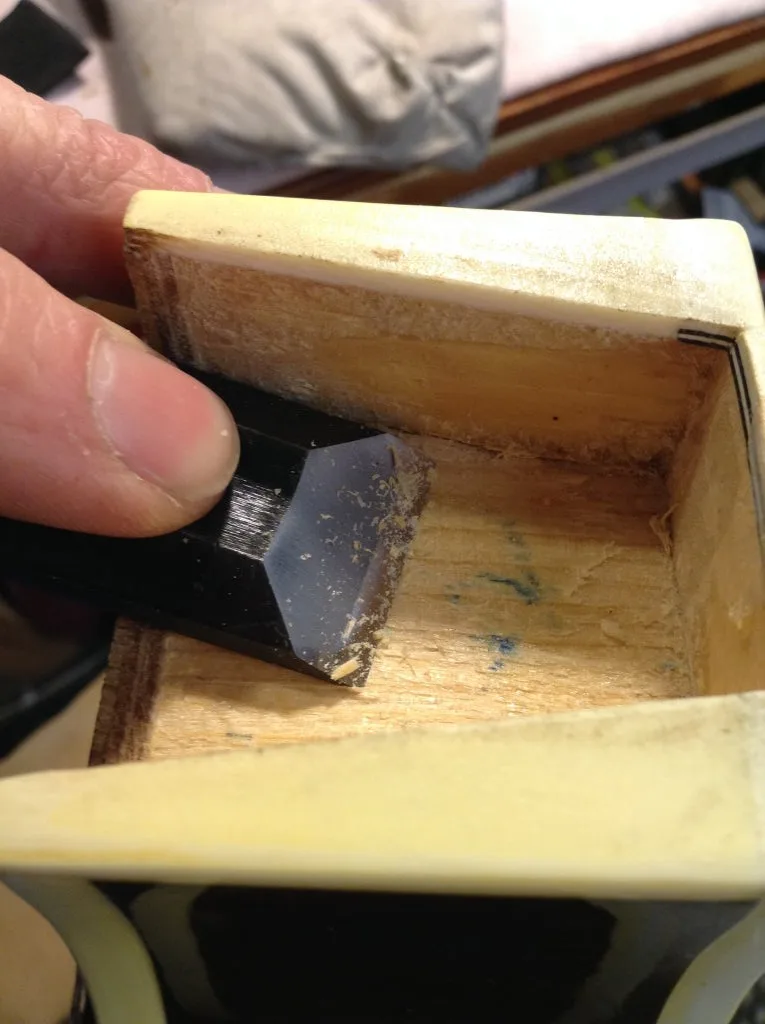
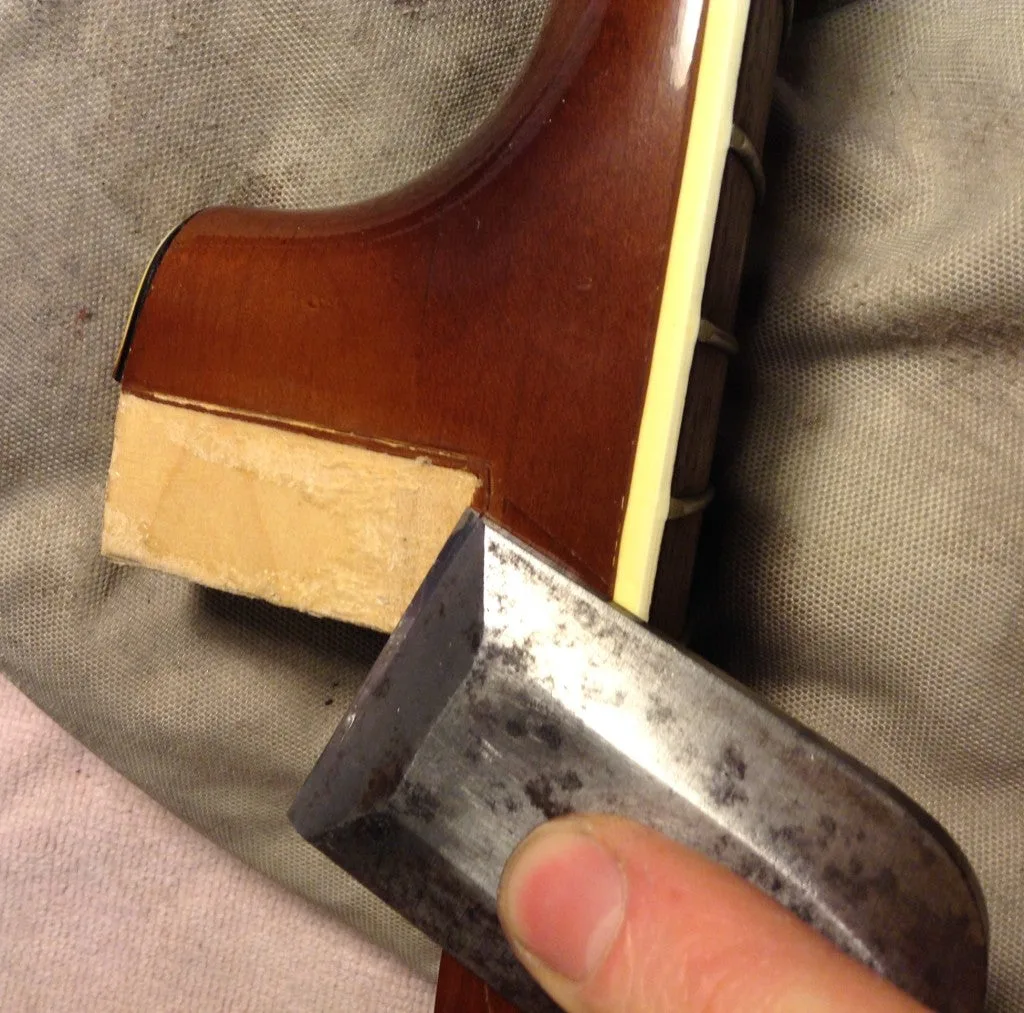
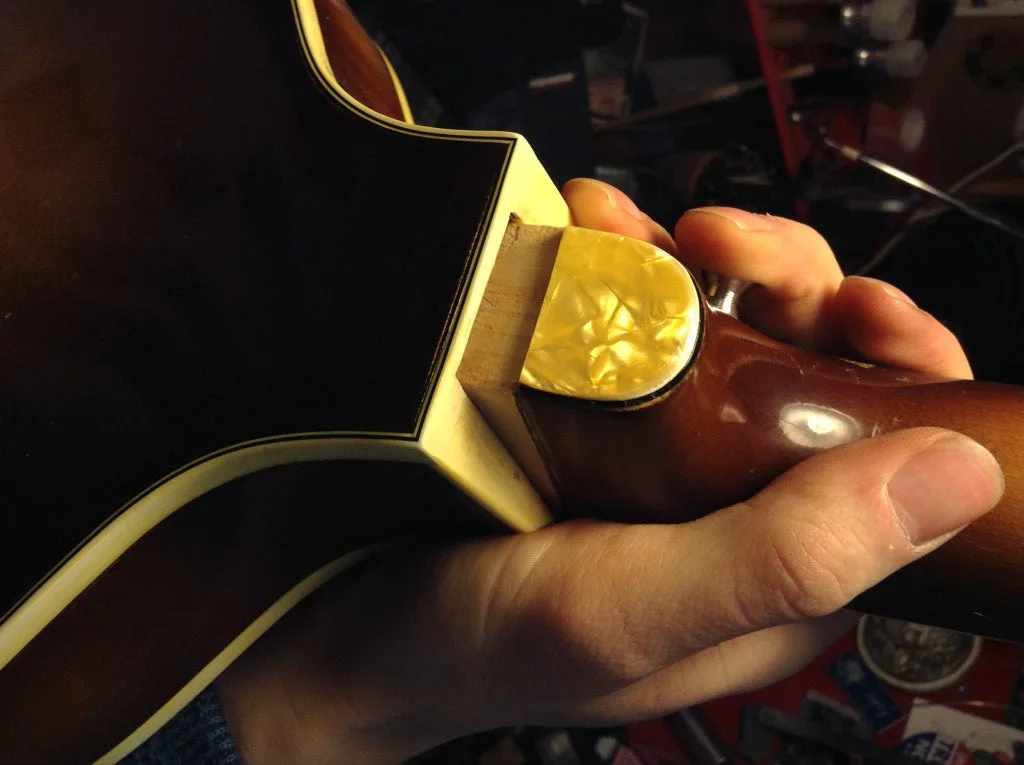
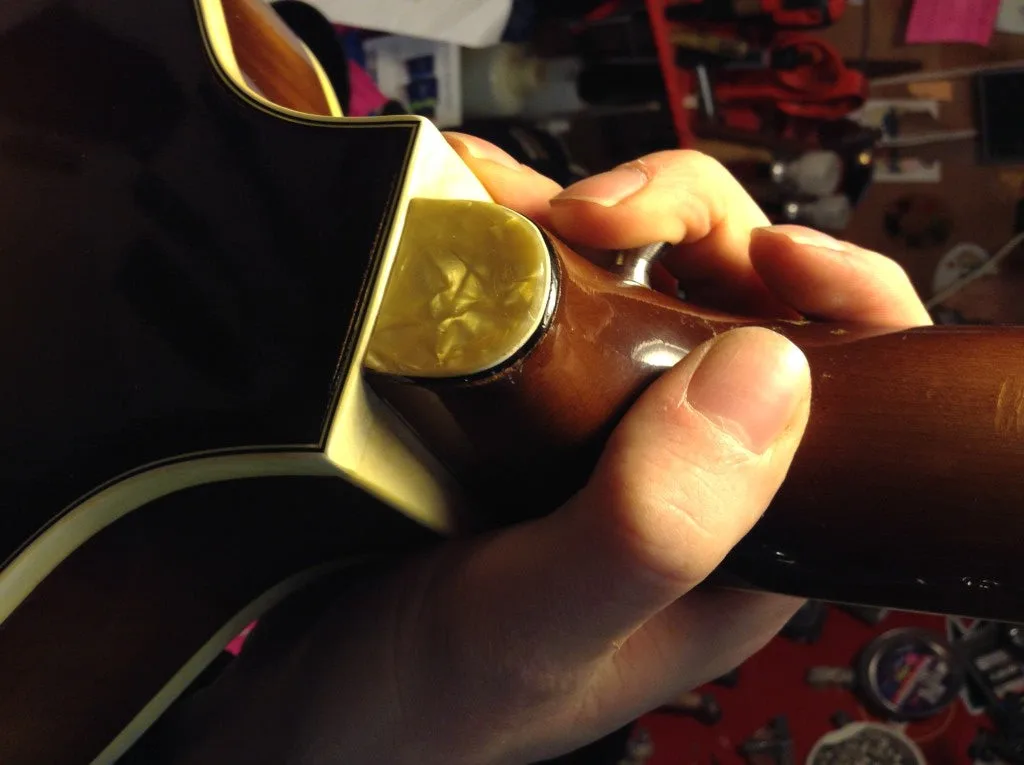
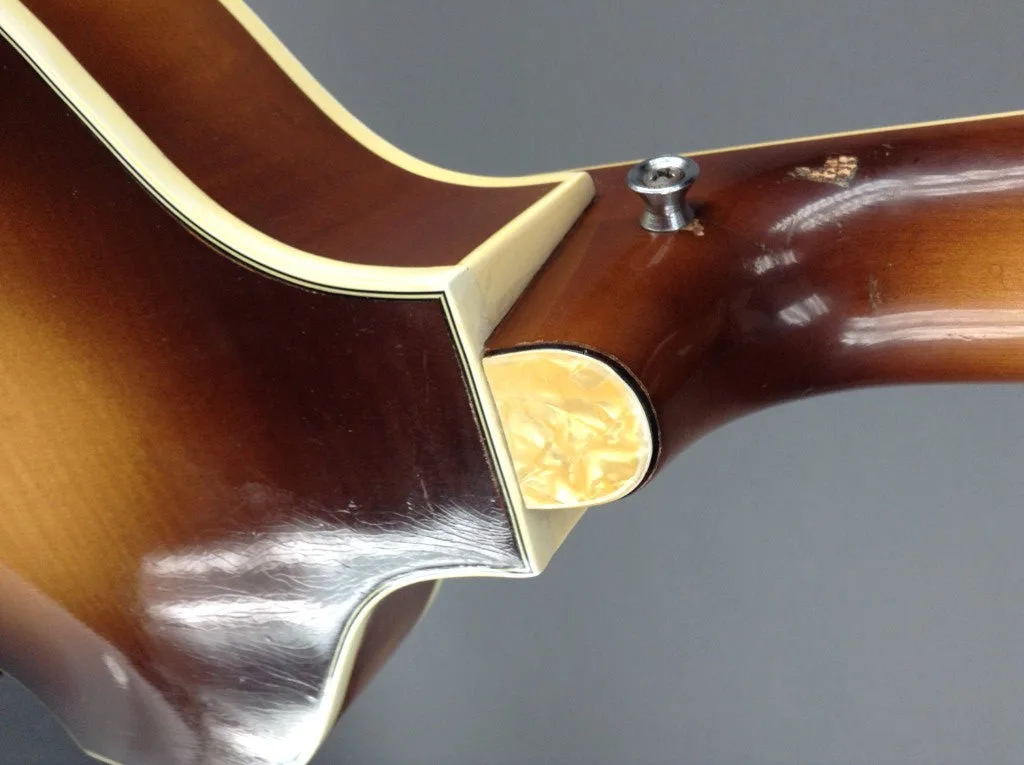
The neck angle was surprisingly good, so only a little material was shaved off the bottom of the heel. The tenon was a bit of a loose fit in the pocket though, so once the angle was set, I glued on a pair of mahogany shims order to get the fit dialed in nice and tight.
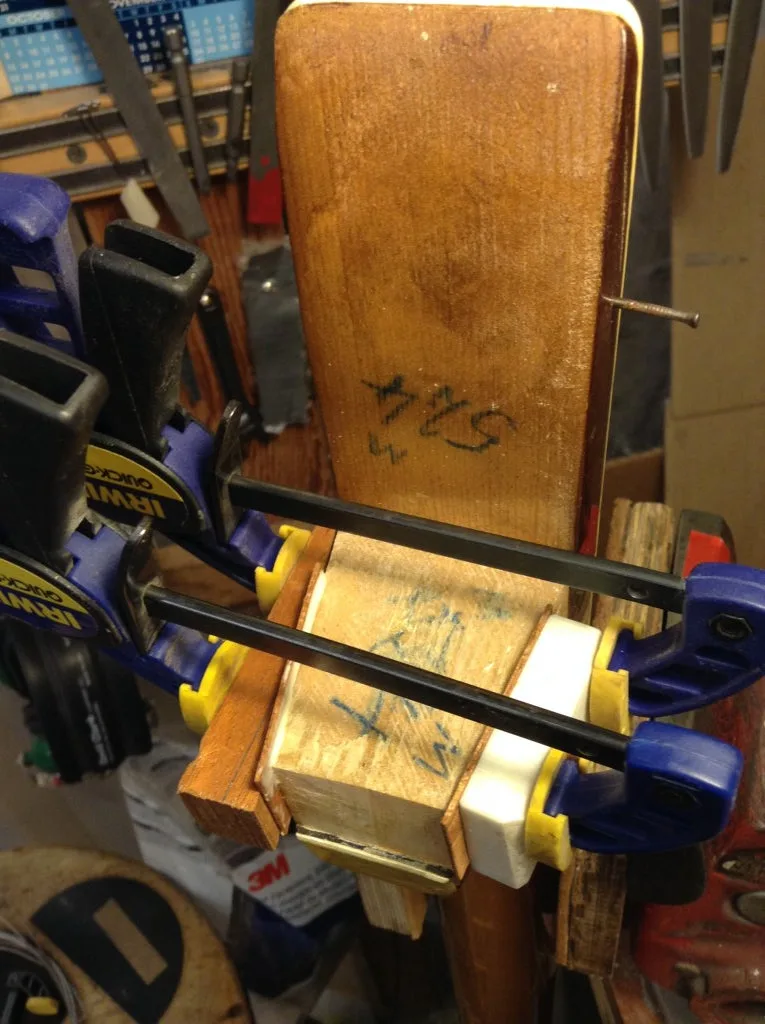
Once the glue was dried, the shims needed to be cut down to fit the pocket nice and snug.
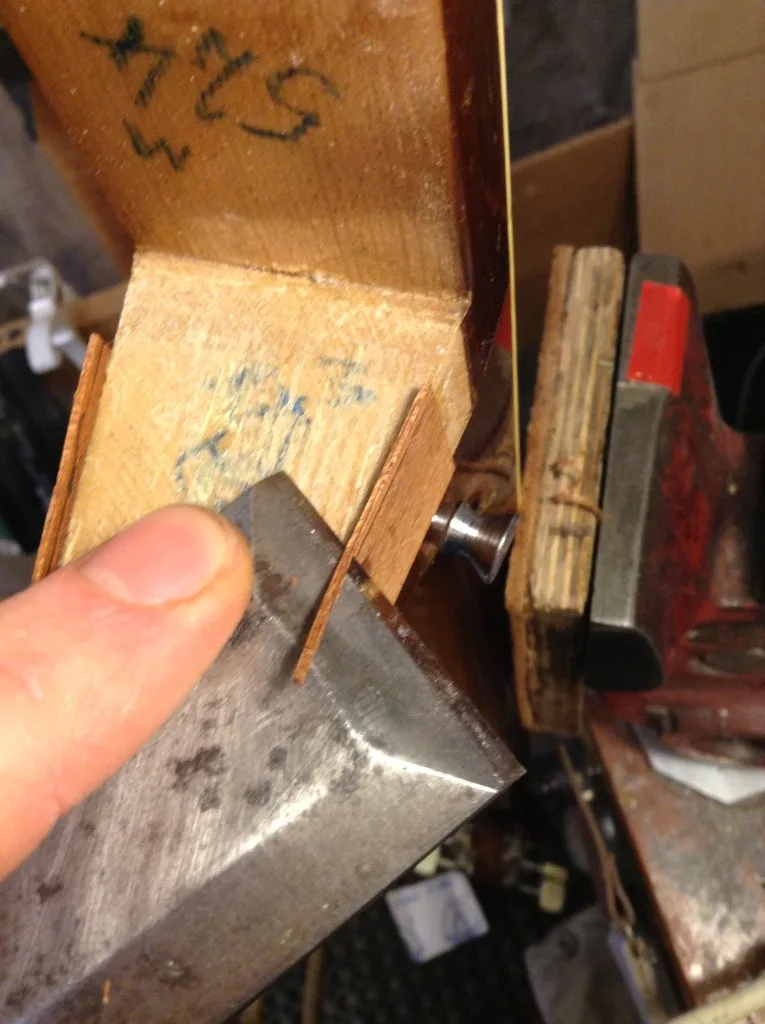
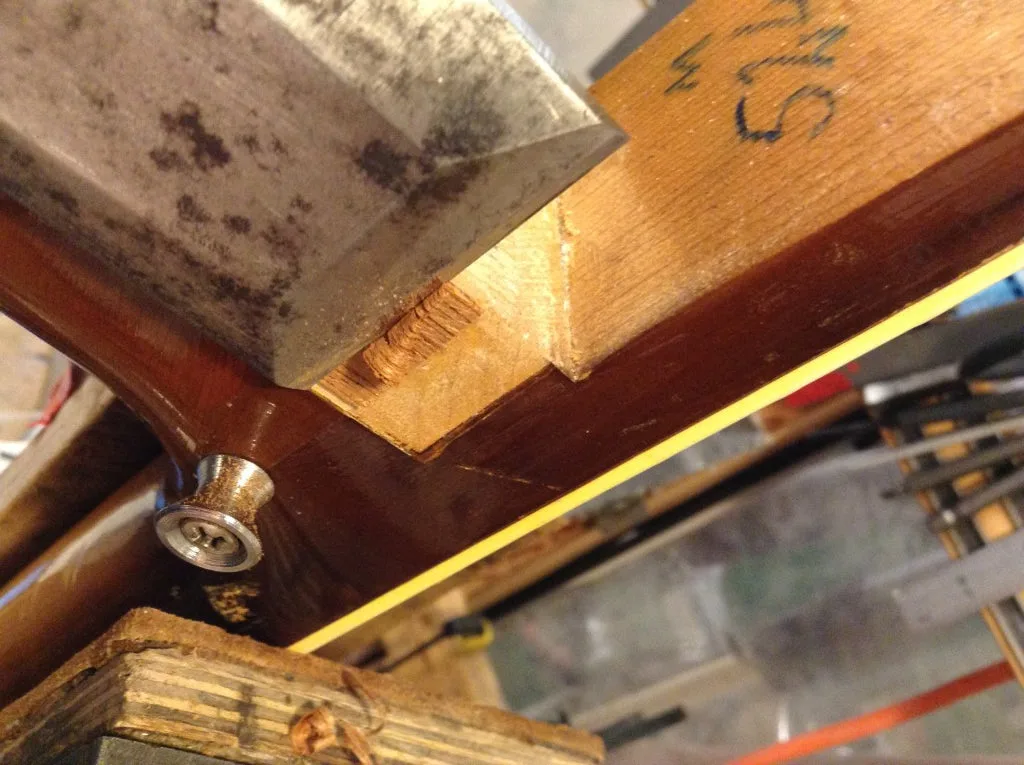
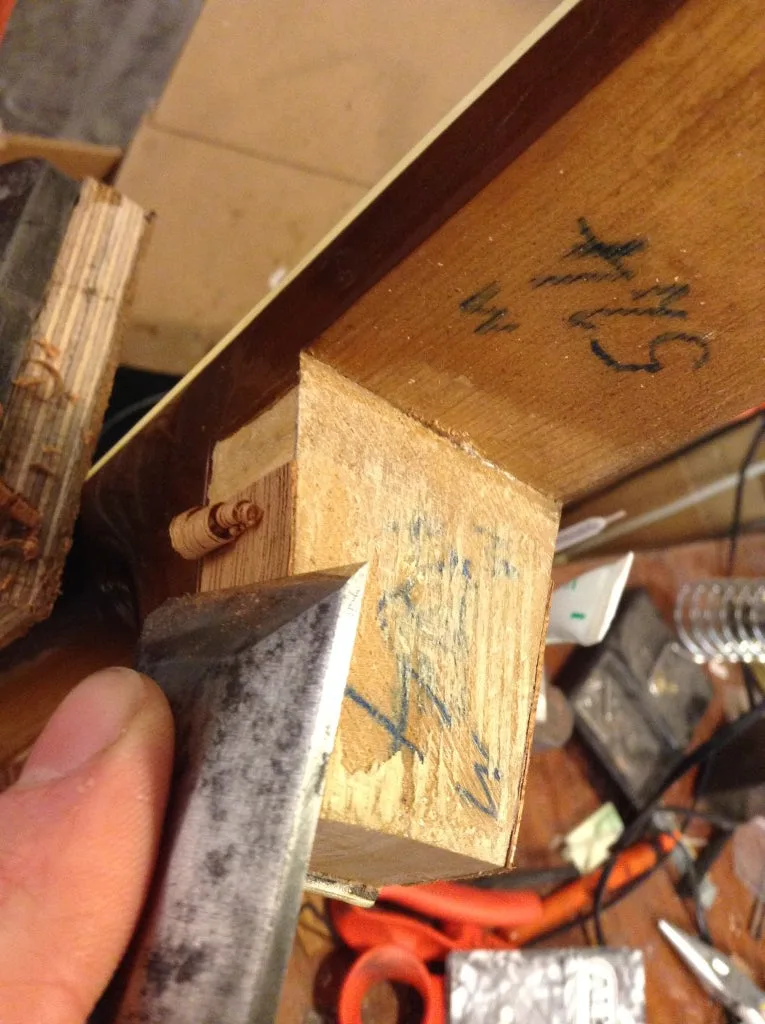
Then after the fit was just right, I glued the neck back in.
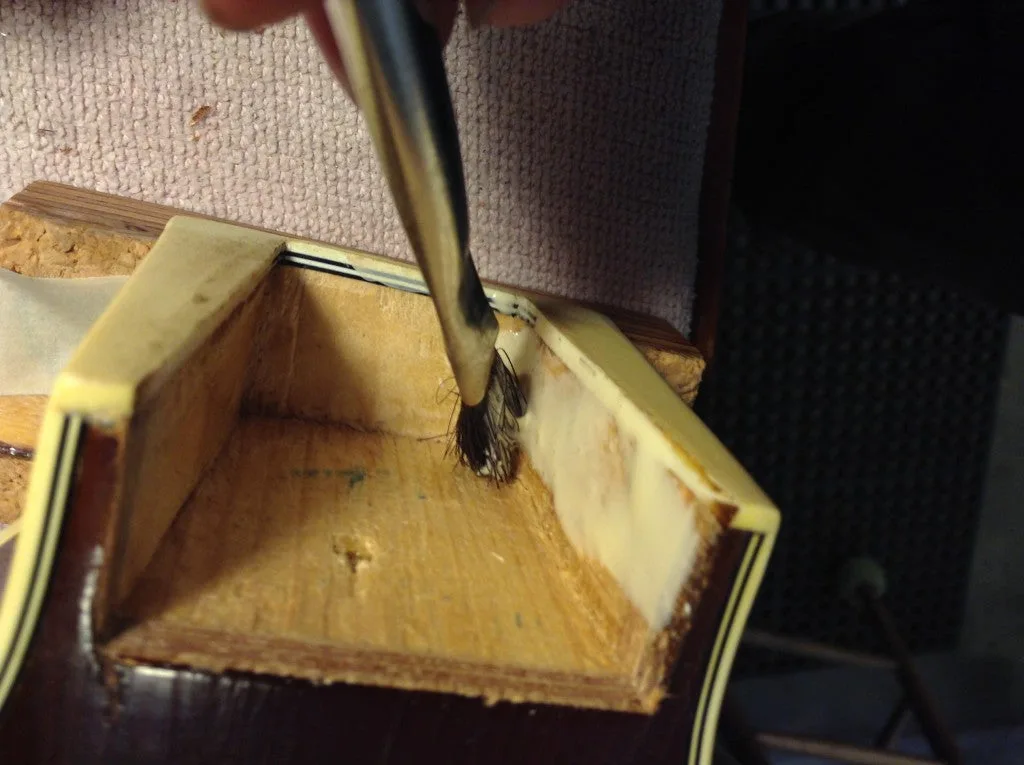
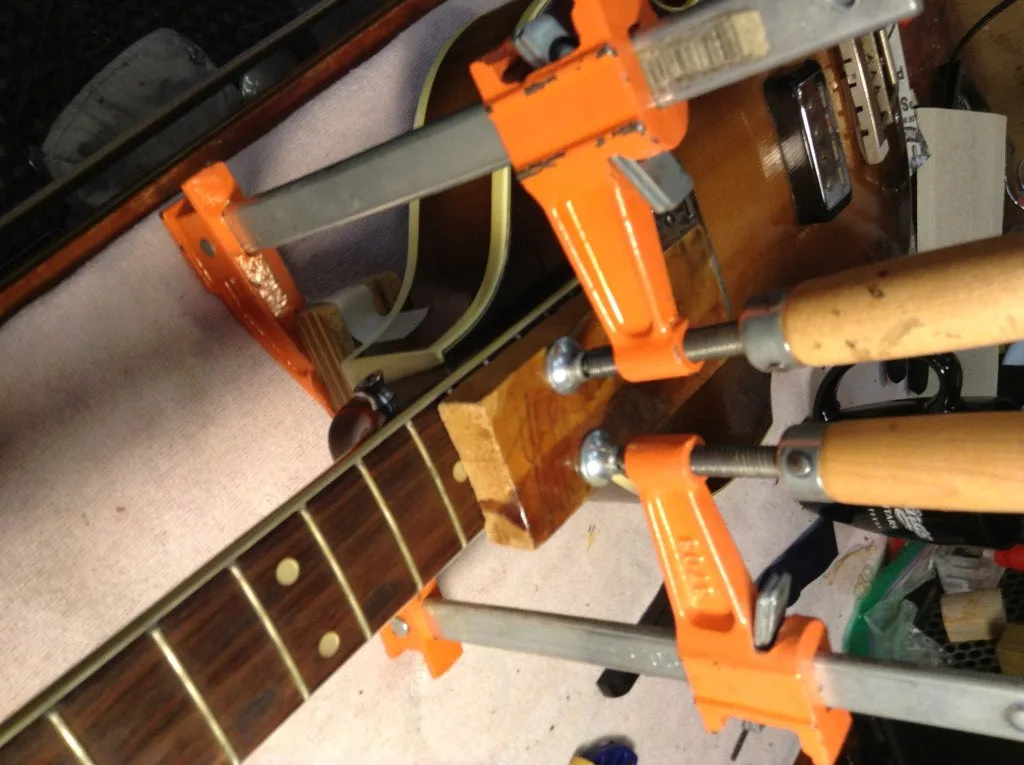
Here it is all strung up and ready to go.
Our Favorite Yankee and his Granite State Guitar
Of course Gryphon has more than its share of California natives, but repair department ace Brian Michael is from the other side of the continent. Born and schooled in New Hampshire, Brian spent a couple of years in the Granite State’s construction trade while attending community college. But at age 22 he fled New England for Arizona to attend the Roberto-Venn School of Luthiery where, as luck would have it, Gryphon co-founder Frank Ford had already been teaching two-day guitar repair seminars for several years (and still does). When we had an opening in the Gryphon Repair Dept. there was an over-the-top recommendation from Roberto-Venn’s head instructor for their star pupil and Brian has been here ever since.

The obvious question is why a New Hampshire kid would move to Arizona and for Brian such a drastic change was driven by the guitar, a romance that didn’t have an easy start. His mother wanted him to stick with piano, but by age 15 Brian was playing in rock bands anyway, and he still performs on both electric bass and electric guitar and always keeps an acoustic handy at home as well.
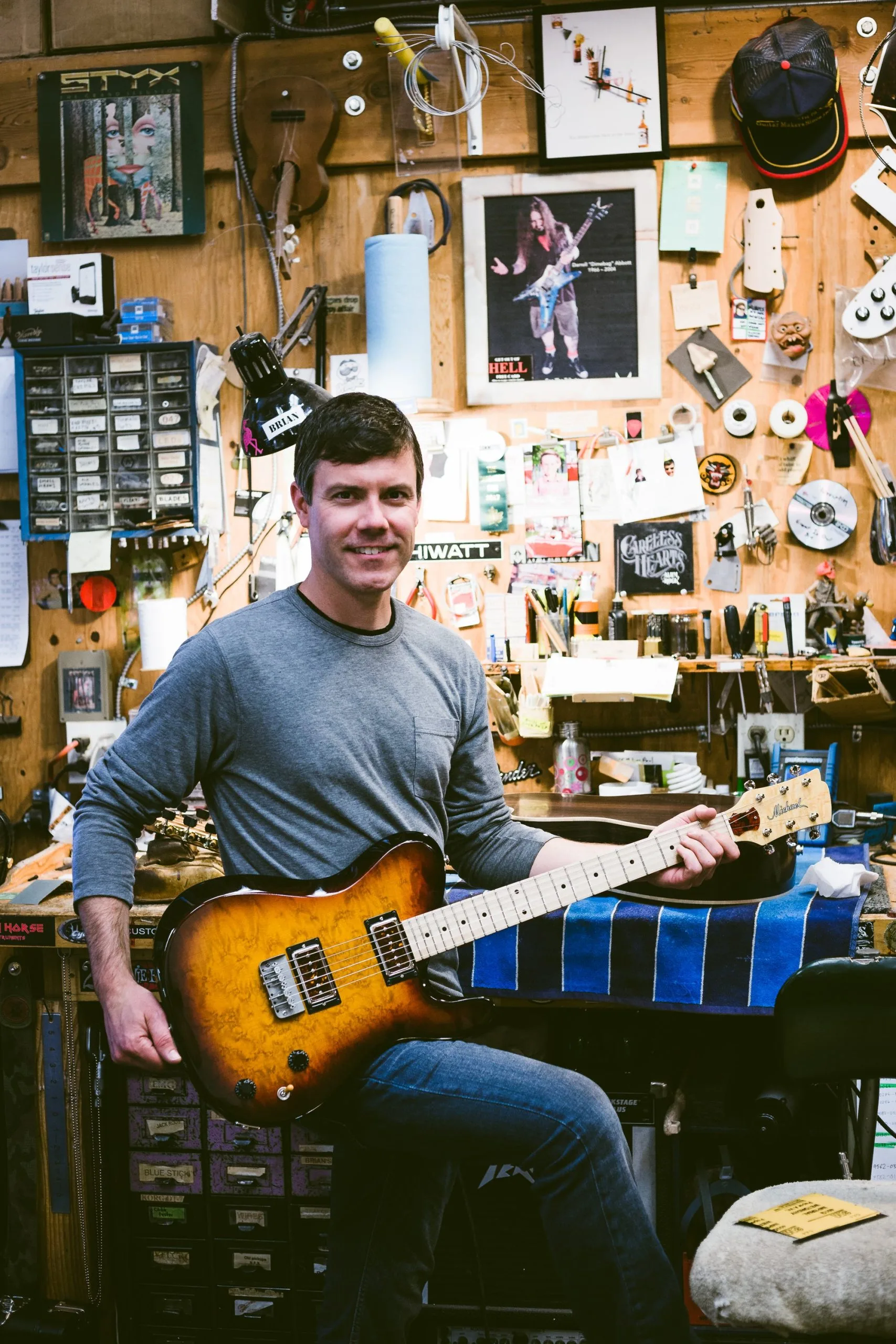
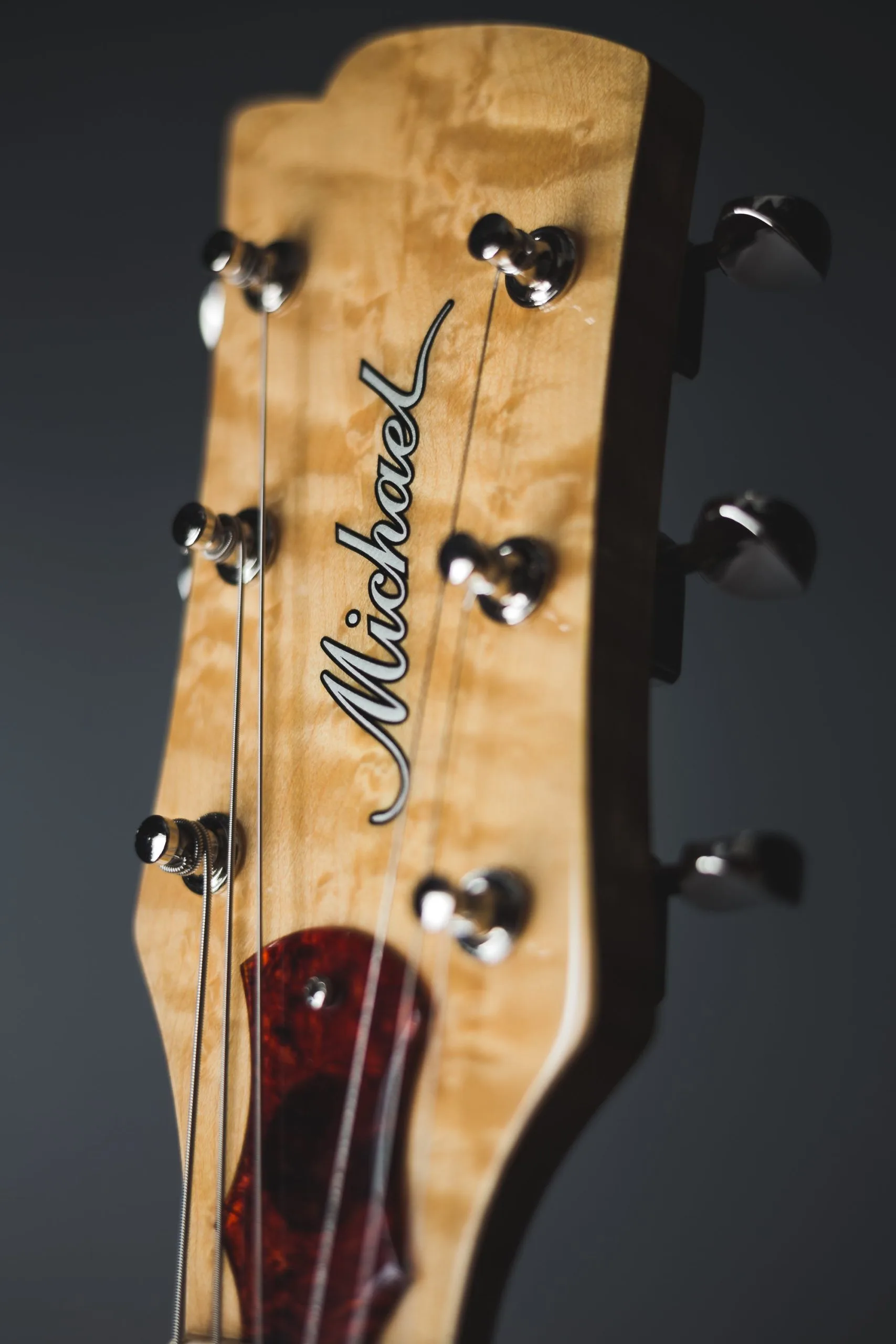
This is Brian’s sixteenth year at Gryphon, and we’ve never had any trouble keeping him busy. As a result, his guitar-building chops have been honed at home where he maintains a small but fully-equipped workshop. Since the birth of son Eli, however, the time needed to build custom electric guitars is far more limited and Brian currently estimates that about four instruments per year is his limit. Most “Michael” branded guitars are custom orders, such as the ’69 Les Paul bench copy he built from scratch for Stooges guitarist James Williamson after restoring the original.
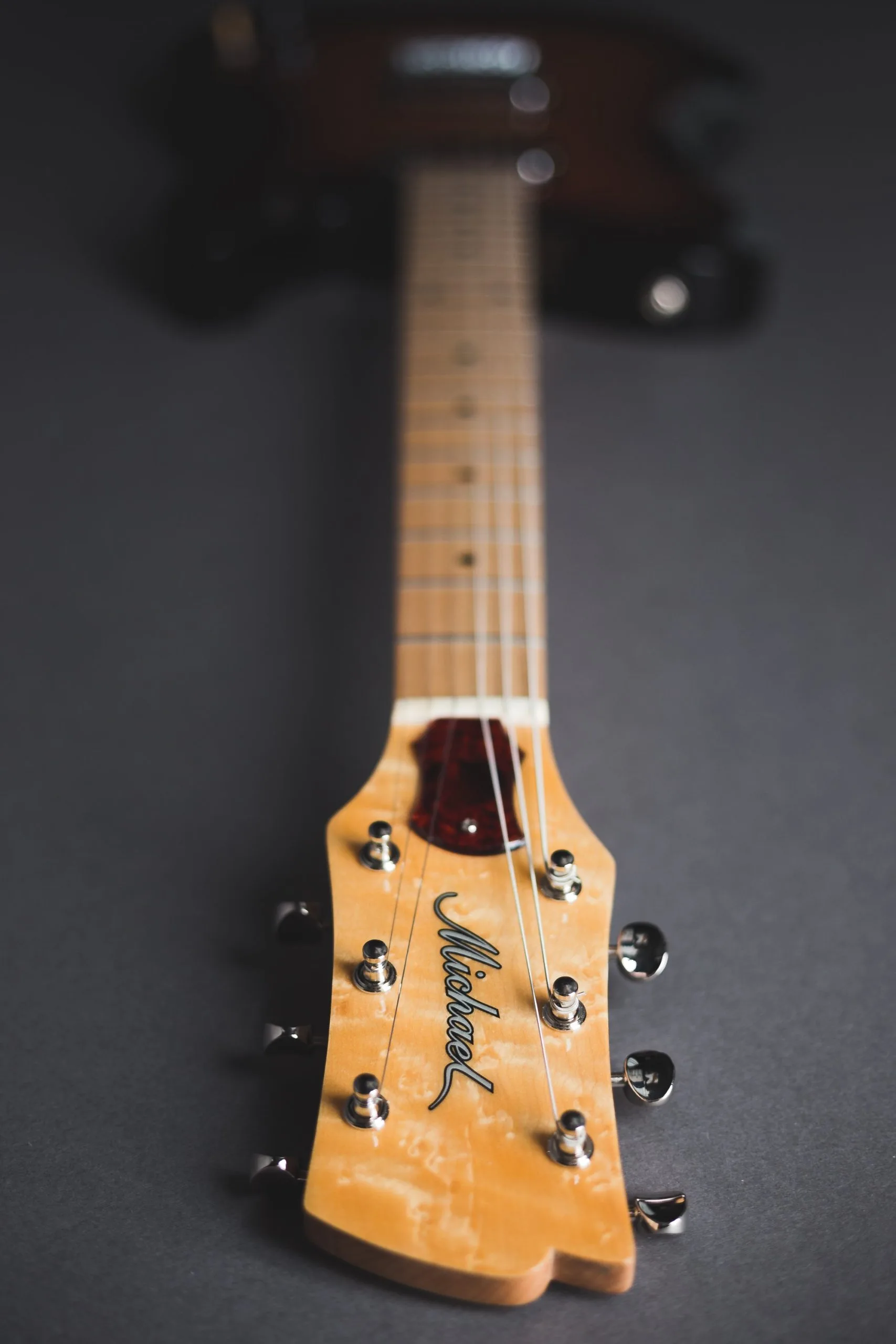
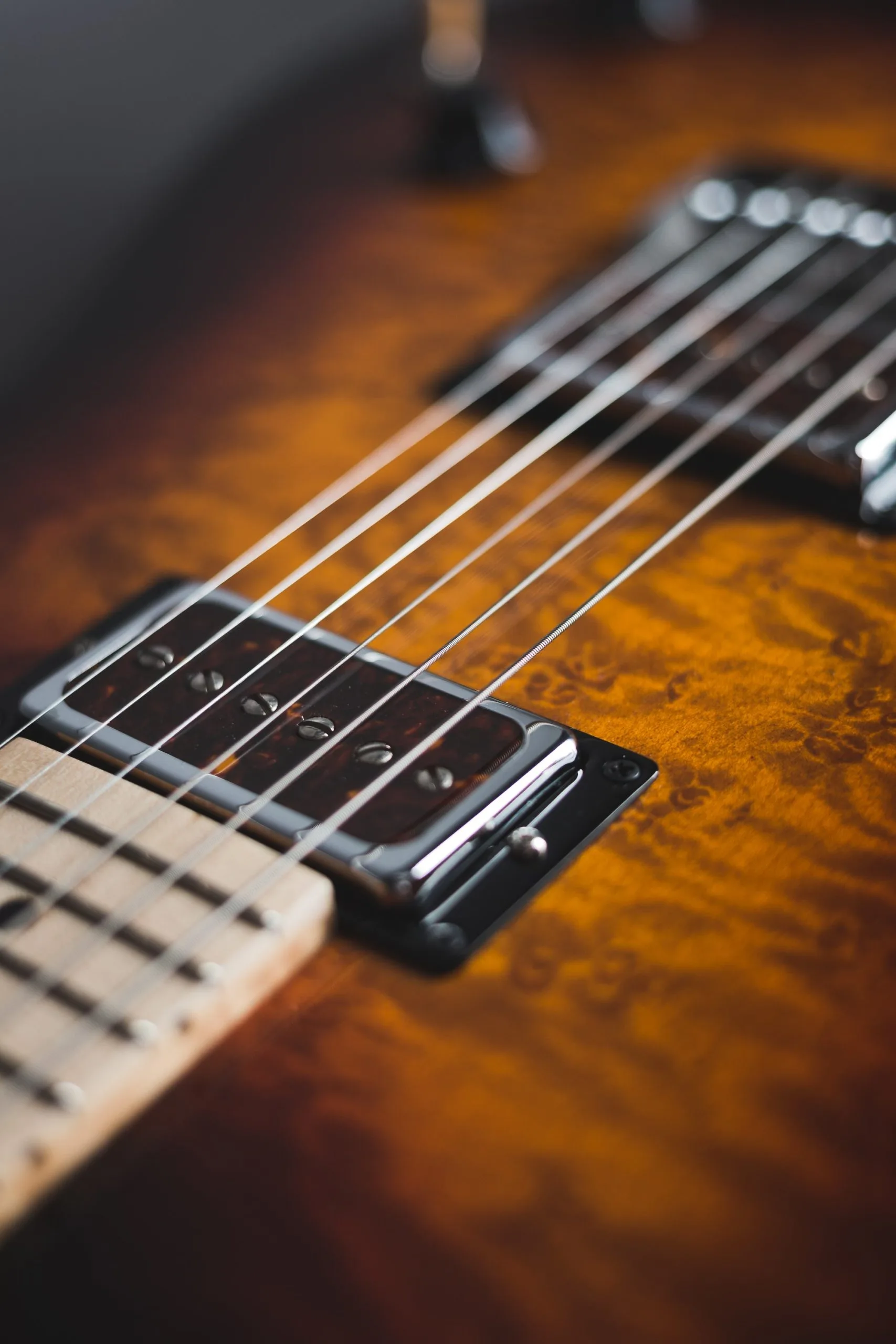
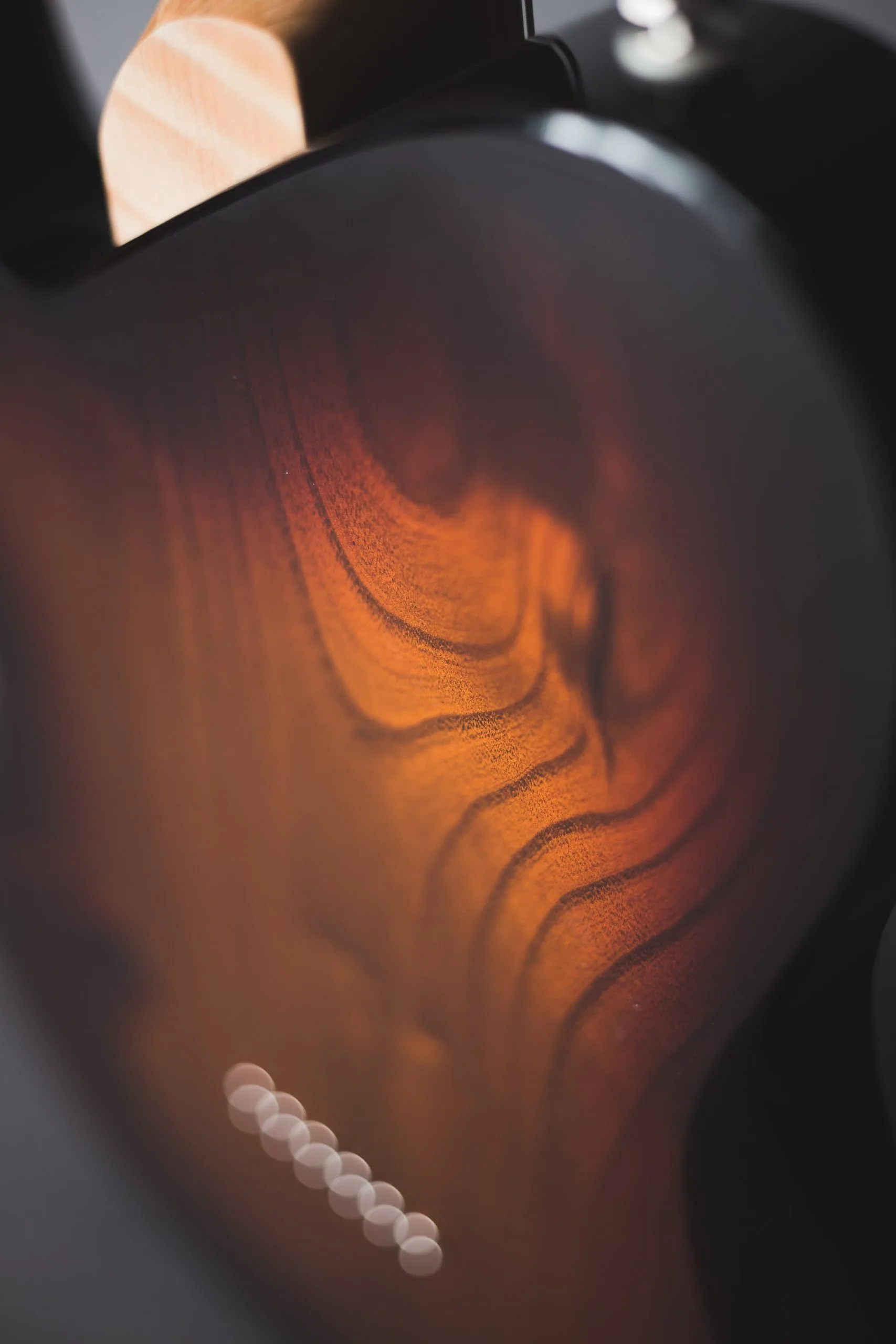
The guitar shown here is an exception to Brian’s usual builds. Called the TG Granite State, it’s a blend of Fender’s venerable Telecaster (the T) but with carved contours and a set neck like Gibson’s SG. The “Granite State” part of the model name is because all the woods used to build this guitar are native to New Hampshire. It appears to have a Fender-like maple neck, but it’s actually a maple neck with separate hornbeam fretboard. The body is made from an 85-year-old slab of butternut with a carved one-piece birdseye maple cap (butternut, sometimes called white walnut, is now a difficult wood to find, especially in this size, as butternut canker has wiped out a high percentage of the trees). Not content to have only the woods used for his TG Granite State guitar be from New Hampshire, the fingerboard nut is made from a moose antler that Brian’s father found when walking in the woods near the family’s property.
When it comes to pickups and other parts the sources Brian tapped for the TG Granite State go far beyond New Hampshire’s borders. The pickups are SCFHs from Jason Lollar in Tacoma, Washington, and the bridge is a Mastery M-7 from our old pal John Woodland in Minneapolis. The SCFH pickup code, by the way, stands for “single coil for humbucker,” which means humbucking pickups could be fitted without additional routing of the top. The faux tortoiseshell celluloid pickup facings nicely match the dots in the fingerboard, as well as the coloring of the birdseye maple top. From peghead to endpin, there’s a consistent theme to the TG Granite State resulting in a balanced, versatile solidbody electric guitar that delights the eyes as well as the ears and fingers.
We hope you’ll come in and try it out.